
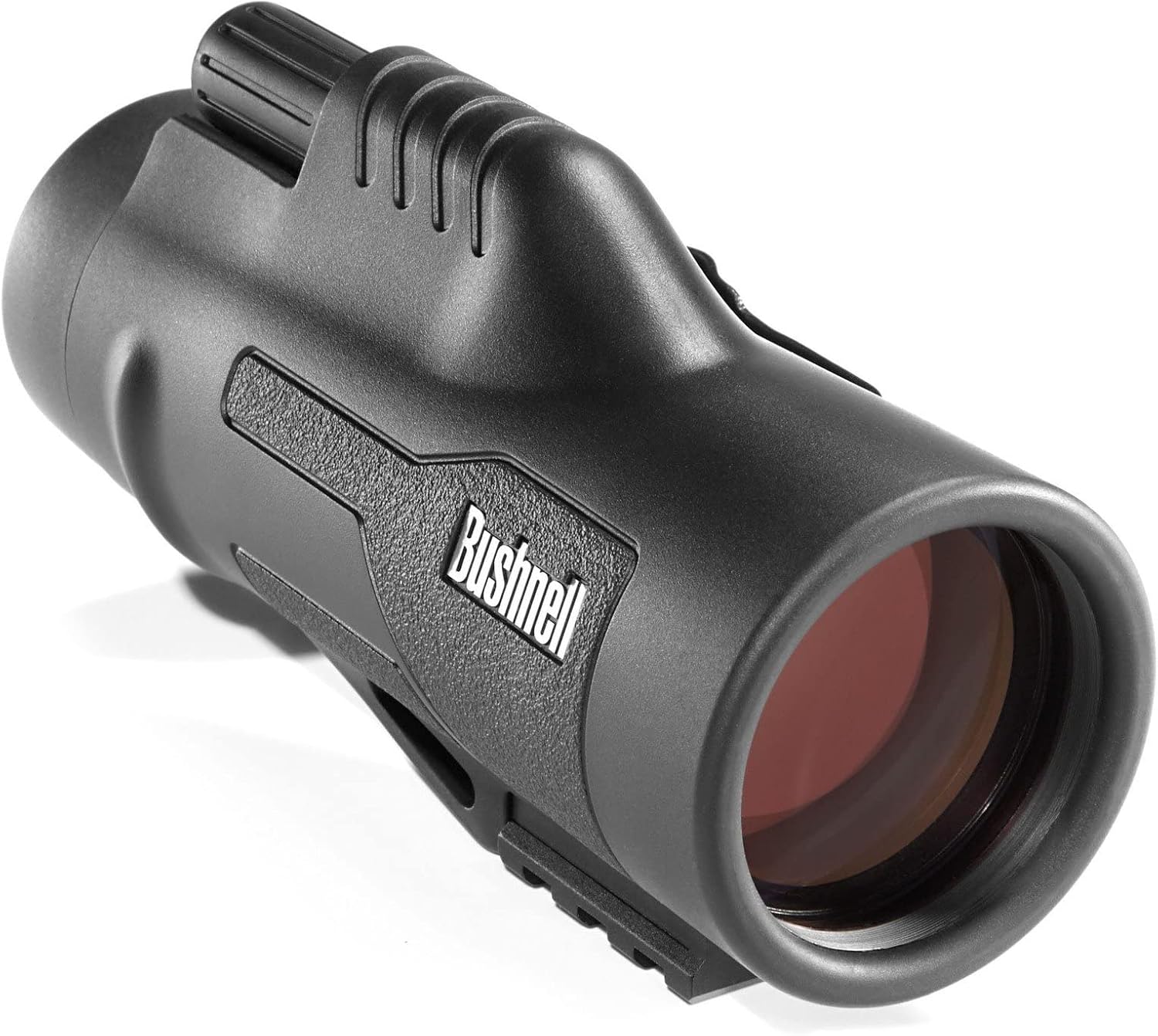
Choosing the Best Monocular for Wildlife Viewing can make every outdoor adventure more rewarding, whether you’re birdwatching, hiking, camping, hunting, or exploring nature. I’ve selected monoculars with essential features such as clear, fully multi-coated optics, BAK4 prisms, practical magnification, bright objective lenses, and comfortable eye relief.
I also consider important extras like waterproof and fog-proof construction, image stabilization, tripod compatibility, and smartphone adapters for capturing memorable wildlife encounters. In this guide, I’ll explore the key features of each top pick, explain what makes them suitable for different wildlife-viewing situations, and share a practical buying guide to help you choose the right model. I’ll also answer frequently asked questions so you can confidently find the best monocular for your outdoor adventures.
6 Best Monocular for Wildlife Viewing
(1)10×100 High Power Monocular Telescope
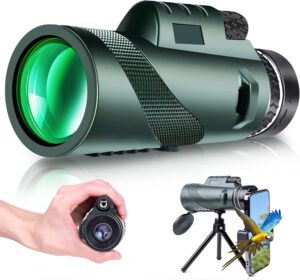
The 80×100 High Power Monocular Telescope is designed for outdoor enthusiasts who want to observe distant wildlife, birds, and natural scenery without carrying bulky optical equipment. Combining 80x magnification with a 100mm objective lens, this monocular is built for long-range viewing and offers several practical features for outdoor adventures.
Its fully multi-coated optics, BAK-4 prism, smartphone adapter, and reinforced tripod make it an interesting option for users who want both visual observation and the ability to capture distant subjects.
One of its main specifications is the 80x magnification paired with a 100mm objective lens. This combination is intended to bring distant subjects closer, making it useful when watching wildlife across open landscapes, observing birds in trees, or viewing animals from a safe distance.
The large objective lens is designed to gather more light, helping provide visible details during outdoor observation.
The monocular features fully multi-coated optical lenses that improve light transmission and image resolution. These coatings help produce brighter images with clearer details, which can be useful when observing animals in different outdoor environments.
It also incorporates premium BAK-4 prisms, which are designed to deliver good brightness and contrast. This optical construction can help maintain image visibility during dimmer conditions, such as early mornings and late afternoons when many wildlife species are active.
Another useful addition is the universal smartphone adapter. It allows users to attach compatible smartphones to the monocular’s eyepiece and take photographs or record videos of distant scenery. This makes the device the Best Monocular for Wildlife Viewing enthusiasts who want to document their observations without carrying a separate camera.
The included reinforced tripod further supports this activity by reducing movement and helping maintain a steadier viewing position. A tripod is particularly important at high magnification, where even small hand movements can make the image difficult to follow.
For everyday convenience, the monocular offers one-hand focusing, allowing users to adjust image sharpness without complicated controls. Its glasses-friendly design also provides a more comfortable viewing experience for people who wear eyeglasses. Additionally, its compact and lightweight construction makes it easier to pack in a backpack for hiking, camping, traveling, hunting, and mountaineering.
This monocular is most suitable for outdoor enthusiasts, beginner wildlife observers, and hobbyists interested in viewing distant animals and scenery. It may also appeal to travelers and birdwatchers who appreciate smartphone photography. However, the advertised 80x magnification is very high for handheld wildlife observation. Users should rely on the included tripod for steadier viewing, particularly when tracking moving animals.
Another advantage is the included unlimited, unconditional, lifetime VIP warranty. It provides a transferable repair or replacement commitment for damaged or defective products. However, loss, theft, intentional damage, and cosmetic damage that does not affect performance are excluded.
Overall, the 80×100 High Power Monocular Telescope offers a combination of powerful advertised magnification, multi-coated optics, smartphone compatibility, and portable construction. It is worth considering for casual outdoor observation, especially for users who want a monocular with accessories for viewing and recording distant scenery.
Specifications
-
Magnification: 80x
-
Objective Lens Diameter: 100mm
-
Optical Coating: Fully multi-coated
-
Prism Type: BAK-4
-
Smartphone Compatibility: Universal smartphone adapter
-
Tripod: Reinforced tripod included
-
Focusing: One-hand focusing
-
Eyeglass Compatibility: Glasses-friendly design
-
Warranty: Transferable lifetime VIP warranty
Pros
• High Advertised Magnification: The 80x magnification is designed for viewing distant wildlife and outdoor scenery.
• Multi-Coated Optics: Fully multi-coated lenses help improve light transmission and image clarity.
• Smartphone Photography: The included phone adapter allows users to capture photographs and videos through the monocular.
• Improved Viewing Stability: The reinforced tripod helps reduce movement and image shake during observation.
• Comfortable and Portable: Its lightweight construction, one-hand focusing, and glasses-friendly design support convenient outdoor use.
Cons
• Requires Tripod Support: The high magnification makes handheld viewing difficult, particularly when observing moving wildlife.
(2)Bushnell Legend 10×42 Best Monocular for Wildlife Viewing
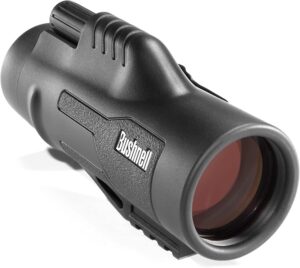
The Bushnell Legend 10×42 Ultra HD Monocular is designed for outdoor enthusiasts who want clear, detailed views of distant wildlife without carrying bulky optical equipment. With 10x magnification, a 42mm objective lens, and advanced optical coatings, this monocular offers a practical combination of viewing power, portability, and durability.
It is particularly suitable for wildlife enthusiasts, birdwatchers, hikers, hunters, and nature observers who need reliable optics for outdoor exploration.
One of the main advantages of the Bushnell Legend 10×42 is its advanced optical construction. It features ED Prime glass, which is designed to reduce color fringing and improve image clarity. Combined with Ultra Wide Band Coating, the optical system enhances light transmission, color accuracy, and resolution.
These features help produce bright, well-defined images, making it easier to observe wildlife and appreciate details such as feather patterns, animal markings, and movements in natural surroundings. Its low-light viewing capabilities are also useful during early mornings and late afternoons when many animals are active.
The monocular provides 10x magnification, bringing distant subjects closer while maintaining a practical balance between magnification and portability. This makes it suitable for observing birds in trees, spotting mammals across open fields, and examining natural scenery during hiking or camping trips.
Unlike larger binoculars or spotting scopes, its compact construction makes it convenient to carry in a pocket or backpack, allowing users to have optical equipment readily available during outdoor activities.
Durability is another important consideration, particularly for people who regularly explore challenging environments. The Bushnell Legend features a rugged, rubber-armored exterior that provides a secure grip and helps protect the body against everyday bumps and handling.
Its O-ring-sealed optics offer waterproof and fog-proof protection, allowing users to continue observing in changing weather conditions. This construction makes it a practical choice for wildlife viewing in environments where moisture, humidity, and temperature changes may affect ordinary optical equipment.
Bushnell has also incorporated a smooth focus knob and fast focusing system to make adjustments straightforward. Users can quickly bring distant animals or nearby natural objects into focus without complicated controls. This is especially helpful when wildlife moves unexpectedly and observation opportunities are brief.
For additional comfort, the monocular comes with an adjustable twist-up eyecup. It accommodates users who wear glasses as well as those who prefer viewing without them. This adjustable design helps provide a comfortable viewing position during extended observation sessions.
The Bushnell Legend 10×42 Ultra HD Best Monocular for Wildlife Viewing suited for wildlife enthusiasts, birdwatchers, hunters, and hikers who prioritize optical clarity, weather resistance, and easy portability. It is particularly useful for people who frequently observe wildlife in changing outdoor conditions and want a dependable monocular for everyday adventures.
Another benefit is the unlimited, unconditional, lifetime VIP warranty. This transferable warranty provides repair or replacement coverage for damaged or defective products. However, it excludes loss, theft, deliberate damage, and cosmetic damage that does not affect functionality.
Overall, the Bushnell Legend 10×42 combines quality optical components, comfortable focusing, weather-resistant construction, and a compact design. It is a strong option for anyone seeking a versatile monocular for wildlife observation and outdoor exploration.
Specifications
-
Magnification: 10x
-
Objective Lens Diameter: 42mm
-
Optical Glass: ED Prime glass
-
Lens Coating: Ultra Wide Band Coating
-
Waterproofing: O-ring sealed waterproof construction
-
Fog Protection: Fog-proof optics
-
Exterior: Rugged rubber armor
-
Focusing System: Smooth focus knob with fast focusing
-
Eyecup: Adjustable twist-up design
Pros
• Excellent Optical Clarity: ED Prime glass and Ultra Wide Band Coating help deliver detailed images with accurate colors and improved light transmission.
• Useful 10x Magnification: Provides a practical level of magnification for birdwatching, wildlife spotting, hunting, and nature observation.
• Weather-Resistant Construction: Waterproof and fog-proof protection supports use in challenging outdoor conditions.
• Comfortable Focusing: The smooth focus knob allows quick adjustments when observing stationary or moving subjects.
• Eyeglass-Friendly Design: The adjustable twist-up eyecup accommodates different viewing preferences, including glasses wearers.
Cons
• Small Viewing Format: Users accustomed to binoculars may need time to adjust to observing through a single eyepiece.
(3)ATN BlazeTrek 6 Thermal Monocular
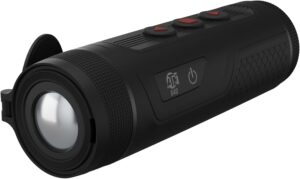
The ATN BlazeTrek 6 Thermal Monocular is designed for outdoor enthusiasts, hunters, wildlife observers, and professionals who need to detect animals and other heat-emitting objects in challenging visibility conditions. Unlike traditional optical monoculars that rely on available light, this thermal device uses heat signatures to identify subjects in darkness, fog, and environments with limited visibility.
Its thermal imaging technology, digital magnification, AI-powered image enhancement, and rugged construction make it an interesting option for nighttime wildlife observation and outdoor surveillance.
One of its main capabilities is its sixth-generation thermal imaging technology, featuring a thermal sensor with a 384 × 288 resolution, 12 μm pixel pitch, and NETD of 18 mK or lower. This combination is designed to detect subtle temperature differences and reveal heat patterns from animals and other objects.
It can be particularly useful when observing wildlife through vegetation, fog, darkness, or low-contrast surroundings where conventional optics may struggle. The thermal sensor helps users locate animals even when they cannot be clearly seen with the naked eye.
The monocular also incorporates SHARPIR AI image enhancement technology. This system processes thermal images in real time to improve edge definition and contrast, helping distinguish animals, people, and movement from surrounding background clutter.
For wildlife observers and hunters, this can make identifying heat signatures more convenient, particularly when monitoring large outdoor areas.
Another important consideration is its Germanium lens system. The supplied product information mentions 19mm and 25mm lens options, allowing users to select a configuration suited to their observation needs.
The 19mm lens is intended for scanning wider areas, while the 25mm option is designed for observing subjects at greater distances. Detection range is advertised at up to 1,300 meters, with digital zoom reaching 8x. Actual detection and identification distances depend on environmental conditions, target size, and thermal contrast.
For comfortable viewing, the ATN BlazeTrek 6 features an 800 × 600 OLED display that presents thermal images with good definition. It also includes hot-point tracking, which automatically identifies the hottest area in the image. Six available color palettes allow users to adjust the thermal display according to their surroundings and personal preferences.
Portability and durability are additional advantages. Weighing approximately 320 grams, the monocular is lightweight enough for extended outdoor activities. Its IP67-rated housing provides protection against dust and water, making it suitable for demanding environments.
The rechargeable battery offers up to eight hours of operation, while onboard audio and video recording and 32GB of internal storage allow users to document observations. Wi-Fi connectivity also supports streaming through the ATN Connect application.
The ATN BlazeTrek 6 is particularly suitable for experienced wildlife observers, hunters, and outdoor professionals who need thermal detection capabilities during nighttime activities. It is also useful for monitoring animals in dense vegetation or poor visibility.
Overall, this thermal monocular combines sensitive thermal imaging, AI enhancement, multiple viewing modes, and convenient recording features in a compact design. It is worth considering for users who prioritize detecting wildlife in darkness rather than conventional daytime optical viewing.
Specifications
-
Thermal Sensor Resolution: 384 × 288 pixels
-
Pixel Pitch: 12 μm
-
Thermal Sensitivity: ≤18 mK NETD
-
Lens Options: 19mm and 25mm Germanium
-
Digital Zoom: Up to 8x
-
Detection Range: Up to 1,300 meters
-
Display: 800 × 600 OLED
-
Battery Life: Up to 8 hours
-
Protection Rating: IP67 waterproof and dustproof
Pros
• Effective Nighttime Wildlife Detection: Thermal imaging helps locate animals in complete darkness, fog, and challenging visibility conditions.
• AI Image Enhancement: SHARPIR technology improves image contrast and edge definition for easier subject identification.
• Flexible Viewing Options: Different Germanium lens configurations, digital zoom, and six color palettes provide viewing flexibility.
• Convenient Recording Features: Built-in audio and video recording, 32GB storage, and Wi-Fi streaming help document observations.
• Lightweight and Rugged Construction: Its 320g body and IP67 protection make it practical for demanding outdoor activities.
Cons
• Digital Zoom Limitations: Increasing digital magnification can reduce image detail and make subject identification more difficult.
(4)Nocs Provisions Zoom Tube 8×32 Best Monocular for Wildlife Viewing
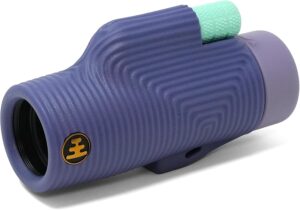
The Nocs Provisions Zoom Tube 8×32 Monocular is a compact outdoor optical device designed for birdwatchers, wildlife enthusiasts, hikers, campers, and travelers who want convenient viewing without carrying bulky equipment.
Combining an 8x magnification system with a 32mm objective lens, this monocular offers a practical balance of portability, image brightness, and viewing comfort. Its lightweight construction, fully multi-coated optics, water-resistant housing, and tripod compatibility make it a useful companion for outdoor exploration.
One of the main advantages of the Zoom Tube is its compact and lightweight design. Weighing approximately 9.5 ounces, it is easy to carry in a backpack or outdoor gear bag without adding significant weight. This makes it particularly suitable for hikers and backpackers who want to observe wildlife along trails without carrying larger binoculars or spotting scopes.
Its 8x magnification brings distant subjects closer, making it useful for watching birds in trees, spotting animals across open landscapes, and examining natural scenery during outdoor adventures.
The optical system is another important consideration. The Zoom Tube features fully multi-coated lenses designed to improve light transmission, reduce unwanted reflections, and deliver bright images with accurate colors.
It also incorporates a Swiss-designed BAK4P prism that supports image brightness and clarity. These optical components help produce detailed views across the advertised 384-foot field of view at 1,000 yards. This relatively wide viewing area is particularly useful for locating moving birds and following wildlife in open environments.
Another convenient feature is its smartphone photography compatibility. Users can align their smartphone camera with the eyepiece to capture photographs and videos of distant subjects. This provides a simple way to document wildlife sightings and share outdoor experiences without necessarily carrying a dedicated camera. However, smartphone positioning and alignment may require some adjustment to achieve satisfactory results.
The Nocs Provisions Zoom Tube is also designed to handle changing outdoor conditions. Its IPX4 water-resistance rating provides protection against water splashes from different directions, making it suitable for use in light rain, fog, and damp environments.
However, it should not be submerged in water. The impact-resistant housing adds protection during everyday outdoor handling, while the patented Rugged Wave Grip provides a secure and comfortable hold.
Viewing comfort is improved through the multi-position twist-up eyecup, which offers three adjustment positions. This allows users to customize the viewing experience whether they wear eyeglasses or prefer observing with the naked eye. Additionally, the central focusing system makes it convenient to adjust sharpness when switching between subjects at different distances.
For more stable observation, the monocular includes a built-in 1/4″-20 tripod mounting connection. This allows users to attach it to a compatible tripod when observing stationary wildlife or capturing smartphone photographs.
The Zoom Tube is particularly suitable for casual birdwatchers, backpackers, travelers, and nature enthusiasts who prioritize portability and straightforward operation. Its listed price of $79.95 also makes it an option for shoppers looking for a compact monocular in an accessible price range.
Overall, the Nocs Provisions Zoom Tube 8×32 combines practical magnification, coated optics, comfortable handling, and weather-resistant construction. Its lightweight design makes it especially appealing for people who want convenient wildlife viewing during everyday outdoor adventures.
Specifications
-
Magnification: 8x
-
Objective Lens Diameter: 32mm
-
Prism Type: Swiss-designed BAK4P
-
Optical Coating: Fully multi-coated
-
Field of View: 384 feet at 1,000 yards
-
Weight: 9.5 ounces
-
Water Resistance: IPX4
-
Tripod Compatibility: 1/4″-20 threaded mount
-
Price: $79.95
Pros
• Lightweight and Portable: Its 9.5-ounce construction makes it convenient for hiking, backpacking, camping, and traveling.
• Bright and Clear Optics: Fully multi-coated lenses and a BAK4P prism help deliver bright images with good color clarity.
• Comfortable Viewing: The three-position twist-up eyecup accommodates glasses wearers and users who prefer viewing without eyeglasses.
• Weather-Resistant Construction: IPX4 protection helps the monocular withstand water splashes during outdoor activities.
• Smartphone and Tripod Compatibility: Users can capture distant scenery with a smartphone and mount the monocular on a tripod for greater stability.
Cons
• Limited Water Protection: The IPX4 rating protects against splashes but does not make the monocular suitable for submersion.
(5)Kite Optics 10×20 Stabi One Image Stabilized Pocket Monocular
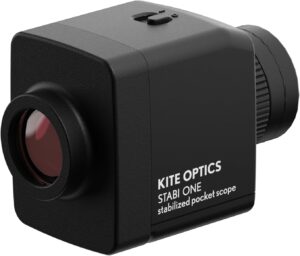
The Kite Optics 10×20 Stabi One Image Stabilized Pocket Monocular is designed for outdoor enthusiasts who want powerful magnification, steady images, and exceptional portability in a compact optical device.
Unlike traditional monoculars that can produce shaky images when used at higher magnifications, this model incorporates an advanced image stabilization system to minimize hand movements and provide a more comfortable viewing experience. Its pocket-sized construction, 10x optical magnification, and smartphone compatibility make it Best Monocular for Wildlife Viewing choice for wildlife enthusiasts, birdwatchers, hikers, and travelers.
One of the most appealing aspects of the Kite Optics Stabi One is its highly portable design. Measuring less than 2.1 x 1.6 x 1.6 inches and weighing approximately 4.5 ounces, it is small enough to fit comfortably in a pocket.
This makes it particularly useful for people who enjoy spontaneous wildlife observation and do not want to carry larger binoculars or spotting scopes. Whether exploring hiking trails, traveling, watching birds, or observing animals during outdoor adventures, users can conveniently take it along without adding much weight to their equipment.
The monocular features 10x optical magnification, allowing users to bring distant subjects closer while maintaining a compact form. This magnification is useful for observing birds, examining wildlife, and viewing natural scenery from a distance.
Despite its small dimensions, the manufacturer emphasizes image sharpness and contrast, aiming to provide detailed viewing performance comparable to larger optical equipment.
Its advanced image stabilization system is the main technological advantage. The Stabi One incorporates a 2-degree stabilization mechanism designed to compensate for hand tremors and larger movements. This helps maintain a steady image at 10x magnification, making it easier to observe distant animals without constantly readjusting your grip.
The stabilization system is particularly beneficial when watching birds in trees or wildlife across open landscapes, where even minor hand movements can make subjects difficult to follow.
Another interesting feature is its smartphone digiscoping capability. The Stabi One can be clipped onto a compatible smartphone, allowing users to increase their phone camera’s effective optical reach. According to the manufacturer, its 10x optical magnification can multiply the smartphone camera’s existing zoom capabilities. For example, a phone with 5x camera magnification can achieve a combined advertised magnification of up to 50x. Actual results will depend on smartphone compatibility, camera configuration, and alignment.
Unlike traditional digiscoping setups, this monocular is designed to eliminate the need for bulky tripods and complicated equipment arrangements. Its built-in stabilization makes handheld smartphone photography more practical when capturing distant scenery and the Best Monocular for Wildlife Viewing.
The device operates using a single AAA battery, making power replacement relatively straightforward. However, users should carry spare batteries during extended outdoor excursions to avoid losing stabilization functionality when power runs out.
The Kite Optics 10×20 Stabi One is particularly suitable for travelers, casual wildlife observers, birdwatchers, and photographers who prioritize portability and image stability. It is especially appealing to people who want a pocket-sized monocular for quick observations without carrying additional equipment.
Overall, the Stabi One combines compact construction, 10x magnification, image stabilization, and smartphone compatibility. It offers a convenient approach to portable wildlife observation for users who value steady viewing and minimal equipment.
Specifications
-
Magnification: 10x optical
-
Objective Lens Diameter: 20mm
-
Stabilization: Advanced 2-degree image stabilization
-
Dimensions: Less than 2.1 x 1.6 x 1.6 inches
-
Weight: 4.5 ounces
-
Power Source: One AAA battery
-
Smartphone Compatibility: Clip-on smartphone digiscoping
-
Design: Compact pocket-sized construction
Pros
• Advanced Image Stabilization: The 2-degree stabilization system helps reduce hand tremors and movement for steadier viewing at 10x magnification.
• Extremely Portable: Its 4.5-ounce weight and compact dimensions make it convenient for pockets, backpacks, and travel bags.
• Useful Optical Magnification: The 10x magnification brings distant birds, animals, and outdoor scenery closer.
• Smartphone Digiscoping: Its smartphone attachment capability allows users to extend their phone’s optical viewing and photography reach.
• No Tripod Required: Built-in image stabilization makes handheld observation and smartphone photography more convenient.
Cons
• Specialized Design: Its compact 20mm optical format may not replace larger monoculars for users who prioritize detailed long-distance wildlife observation.
(6)Gosky 12×55 Monocular
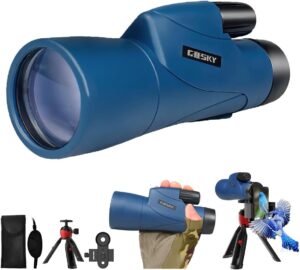
The Gosky 12×55 Monocular for Adults is designed for wildlife enthusiasts, birdwatchers, hikers, and outdoor adventurers who want powerful magnification and bright, detailed views of distant subjects. Combining 12x magnification with a large 55mm objective lens, this monocular offers a practical optical setup for observing animals, birds, and natural scenery across different environments.
Its fully multi-coated optics, BAK4 prism, waterproof construction, and included smartphone adapter make it a versatile option for outdoor observation and photography.
One of the main advantages of the Gosky 12×55 is its 12x magnification. This allows users to bring distant subjects closer, making it easier to examine birds in trees, identify wildlife across open landscapes, and observe animals without approaching them too closely.
It also offers a 352-foot field of view at 1,000 yards, providing a relatively wide viewing area for locating and following moving subjects. This combination of magnification and viewing coverage makes it useful for birdwatching, wildlife spotting, sightseeing, sporting events, and travel.
The monocular features a large 55mm objective lens designed to collect more available light than smaller optical systems. This helps maintain image brightness and visible detail when observing subjects in shaded environments, cloudy weather, and during early mornings or late afternoons.
It also provides a 4.58mm exit pupil, which contributes to comfortable viewing by delivering a relatively broad beam of light to the eye. These characteristics make it suitable for wildlife enthusiasts who frequently observe animals during different lighting conditions.
Another important component is its 18mm BAK4 prism, which works alongside fully multi-coated optical surfaces to improve light transmission, image contrast, and color reproduction. The coatings help minimize unwanted reflections while supporting clearer views of distant subjects. This optical arrangement is useful when examining fine details, such as bird plumage, animal markings, and features within natural landscapes.
Durability is also an important consideration for outdoor equipment. The Gosky 12×55 features an IPX7 waterproof body designed to protect its internal optical components against water exposure.
Its nitrogen-filled construction helps prevent internal fogging when temperatures change, while the rubber-armored exterior provides a secure grip and additional protection against everyday impacts. These features make it suitable for outdoor adventures where rain, humidity, and changing weather conditions are possible.
For added convenience, the monocular comes with a tripod and adjustable smartphone adapter. The tripod helps minimize hand movement during extended observation sessions, which is particularly helpful at 12x magnification.
The smartphone adapter allows users to align compatible phones with the eyepiece and capture photographs or videos of distant wildlife. This is useful for birdwatchers and nature enthusiasts who enjoy documenting their observations.
The Gosky 12×55 is particularly Best Monocular for Wildlife Viewing beginner ,birdwatchers, hikers, and travelers who want a combination of magnification, brightness, and weather protection. It is also a good option for users interested in smartphone wildlife photography.
Overall, the Gosky 12×55 combines a large objective lens, quality prism construction, practical magnification, and useful accessories. Its waterproof design and smartphone compatibility make it a versatile choice for outdoor observation.
Specifications
-
Magnification: 12x
-
Objective Lens Diameter: 55mm
-
Field of View: 352 feet at 1,000 yards
-
Exit Pupil: 4.58mm
-
Prism Type: 18mm BAK4
-
Optical Coating: Fully multi-coated (FMC)
-
Waterproof Rating: IPX7
-
Fog Protection: Nitrogen-filled construction
-
Accessories: Tripod and adjustable smartphone adapter
Pros
• Powerful 12x Magnification: Brings distant birds and wildlife closer, making it useful for long-range outdoor observation.
• Large 55mm Objective Lens: Collects more available light to support brighter viewing in shaded areas and changing daylight conditions.
• Quality Optical Components: BAK4 prisms and fully multi-coated lenses help improve image clarity, contrast, and color reproduction.
• Weather-Resistant Construction: IPX7 waterproof protection and nitrogen filling help protect the optics against moisture and internal fogging.
• Useful Included Accessories: The tripod and smartphone adapter provide additional stability and opportunities for wildlife photography.
Cons
• Low-Light Performance Has Limits: Despite its large objective lens, image brightness and detail will still decrease in very dark conditions.
Read Also:7 Best Monocular for Bird Watching
Advantages of the Best Monocular for Wildlife Viewing
1. Clear and Detailed Views of Wildlife
A quality monocular makes it easier to observe animals from a distance without disturbing their natural behavior. Magnification options such as 8x, 10x, and 12x bring distant birds, mammals, and other wildlife closer, allowing you to notice details such as feather patterns, fur textures, and animal movements. Features like fully multi-coated lenses, BAK4 prisms, and ED glass help improve image clarity, contrast, and color reproduction, making wildlife observation more enjoyable.
2. Better Performance in Different Lighting Conditions
Wildlife is often most active during early mornings and late afternoons when natural light can be limited. Monoculars with larger objective lenses, such as 42mm or 55mm, can gather more light than smaller alternatives, helping produce brighter views in suitable conditions.
Advanced optical coatings also help maximize light transmission and reduce unwanted reflections. This advantage is particularly useful for observing animals in shaded forests, wooded areas, and other environments where lighting changes throughout the day.
3. Easy to Carry on Outdoor Adventures
Monoculars are generally more compact and lightweight than binoculars, making them convenient for hiking, camping, birdwatching, and wildlife photography trips. Pocket-sized models are easy to store in a backpack or carry around your neck, while larger models can offer more powerful optics without requiring bulky equipment. Their portable designs allow you to keep an optical viewing tool within reach whenever an interesting animal appears.
4. Versatile Wildlife Observation and Photography
Many modern monoculars offer more than basic magnification. Smartphone adapters allow users to capture photos and videos through the eyepiece, making it easier to document wildlife sightings and share memorable moments.
Some models also include tripod compatibility, which helps maintain a steady image during extended observation or photography. Image-stabilized options provide additional convenience by reducing the effects of hand movement, especially when viewing distant subjects.
5. Reliable Performance in Outdoor Environments
Wildlife viewing often takes place in unpredictable weather and challenging outdoor conditions. A monocular with waterproof, fog-proof, or water-resistant construction can provide greater confidence when used in humid forests, light rain, or near water.
Features such as nitrogen-filled housings,sealed optics, and protective rubber armor help protect the instrument against moisture, dust, and everyday handling. Choosing a durable model means you can spend more time observing wildlife and less time worrying about your equipment.
Factors to Consider When Choosing the Best Monocular for Wildlife Viewing
1. Magnification Power
Magnification determines how close distant animals appear when viewed through a monocular. Options such as 8x, 10x, and 12x are suitable for many wildlife-viewing situations. Higher magnification can help you observe animals at greater distances, but it may also make image movement more noticeable when holding the monocular by hand.
For general wildlife observation, 8x to 12x magnification offers a practical balance between detail, image stability, and ease of use. If you choose a model with very high magnification, consider one that supports tripod mounting or image stabilization.
2. Objective Lens Size and Image Brightness
The objective lens is the large lens at the front of a monocular, and its diameter affects how much light enters the optical system. Larger lenses, such as 42mm or 55mm, can provide brighter images in suitable lighting conditions, making them useful for observing wildlife in shaded environments or during early mornings and late afternoons. However, larger lenses usually increase the overall size and weight of the device. Consider your typical viewing conditions and decide whether brighter images or easier portability is more important.
3. Optical Quality and Lens Coatings
Optical quality plays a major role in how clearly you can see wildlife details. Look for features such as fully multi-coated lenses, BAK4 prisms, and extra-low dispersion glass where available. These technologies can improve light transmission, contrast, and image clarity while helping reduce unwanted reflections and color fringing.
Good optics are especially valuable when observing birds, mammals, and other animals with fine patterns or subtle coloring. A monocular with quality glass and coatings can provide a more satisfying viewing experience than one selected based on magnification alone.
4. Field of View and Eye Relief
Field of view describes how much of the surrounding area you can see through the monocular at a given distance. A wider field of view makes it easier to locate moving animals, follow birds in flight, and observe wildlife without constantly repositioning the device.
Eye relief is also important, particularly for people who wear glasses. Longer eye relief allows you to see the full image comfortably without pressing your eye too close to the eyepiece. Check both specifications to ensure the monocular is comfortable and practical for extended wildlife observation.
5. Durability and Weather Resistance
Wildlife viewing often involves forests, grasslands, mountains, and other outdoor environments where equipment may encounter rain, dust, humidity, and accidental impacts. Consider a monocular with waterproof or water-resistant construction, fog-proof protection, and a durable rubber-armored body. Sealed optics and nitrogen-filled housings can help prevent internal fogging when temperatures change.
Pay attention to the stated protection rating because water resistance levels differ; for example, protection against splashes does not necessarily mean the device can withstand submersion. A rugged design is particularly useful for frequent outdoor use.
6. Portability, Stability, and Additional Features
The best monocular should be convenient to carry and comfortable to use during long outdoor activities. Lightweight, compact models are suitable for hiking and travel, while larger models may offer more substantial objective lenses and additional features. Consider whether the device includes tripod compatibility, image stabilization, a smartphone adapter, or a carrying case.
Tripod support helps reduce shaking during extended viewing, while image stabilization can make distant subjects easier to observe. Smartphone compatibility is useful if you want to capture wildlife photos or videos through the eyepiece. Choose features that match your viewing habits without adding unnecessary weight or complexity.
Best Monocular for Wildlife Viewing FAQs
1. What magnification is best for wildlife viewing?
Magnification between 8x and 12x is generally suitable for wildlife viewing. An 8x monocular offers a wider field of view and makes it easier to follow moving animals, while 10x and 12x options provide more detail when observing wildlife at greater distances. Higher magnification can be useful, but it may require a tripod or image stabilization to keep the image steady.
2. What features should I look for in a monocular for wildlife viewing?
Look for quality optics, fully multi-coated lenses, BAK4 prisms, and a suitable objective lens size for your viewing conditions. Waterproof and fog-proof construction is valuable for outdoor use, while a comfortable eyepiece and adequate eye relief make extended observation easier. A tripod mount, image stabilization, or smartphone adapter can also be useful depending on how you plan to use the monocular.
3. Can I use a monocular to take pictures of wildlife with my smartphone?
Yes. Many monoculars support smartphone photography through an adjustable phone adapter that aligns the phone camera with the eyepiece. This allows you to capture photos and videos of distant animals without carrying a dedicated camera. For better results, use a stable tripod when possible, keep the phone properly aligned, and avoid excessive digital zoom to preserve image detail.
Final Word
The best monoculars for wildlife viewing combine clear, detailed optics, practical magnification, portability, and durable construction to make observing animals in their natural habitats easier and more enjoyable. Whether you prefer a compact model for hiking, a higher-powered option for distant wildlife, or an image-stabilized monocular for comfortable viewing, the right choice depends on your outdoor activities and viewing conditions.
Features such as fully multi-coated lenses, BAK4 prisms, larger objective lenses, waterproof protection, and tripod compatibility further improve the experience. Some models also include smartphone adapters, allowing you to capture memorable wildlife encounters. By considering magnification, optical quality, field of view, weather resistance, and ease of use, you can choose the best monocular for wildlife viewing and enjoy clearer observations wherever your adventures take you.