
In this guide to the Best Monocular for Bird Watching, I’ll help you find a model that delivers clear, bright images, comfortable viewing, and reliable performance in different outdoor conditions.
I’ll explore important features such as magnification power, objective lens size, BAK4 prisms, fully multi-coated optics, field of view, smooth focusing, and waterproof or fog-resistant construction. I’ll also review top monocular picks with useful features such as adjustable eyecups, lightweight designs, tripod compatibility, and smartphone adapters for capturing bird sightings.
Whether you’re a beginner or an experienced bird watcher, I’ll cover the best options, explain what to consider in my buying guide, and answer frequently asked questions to help you choose the best monocular for bird watching with confidence.
7 Best Monocular for Bird Watching
(1)Amither 80×100 High-Powered Monocular
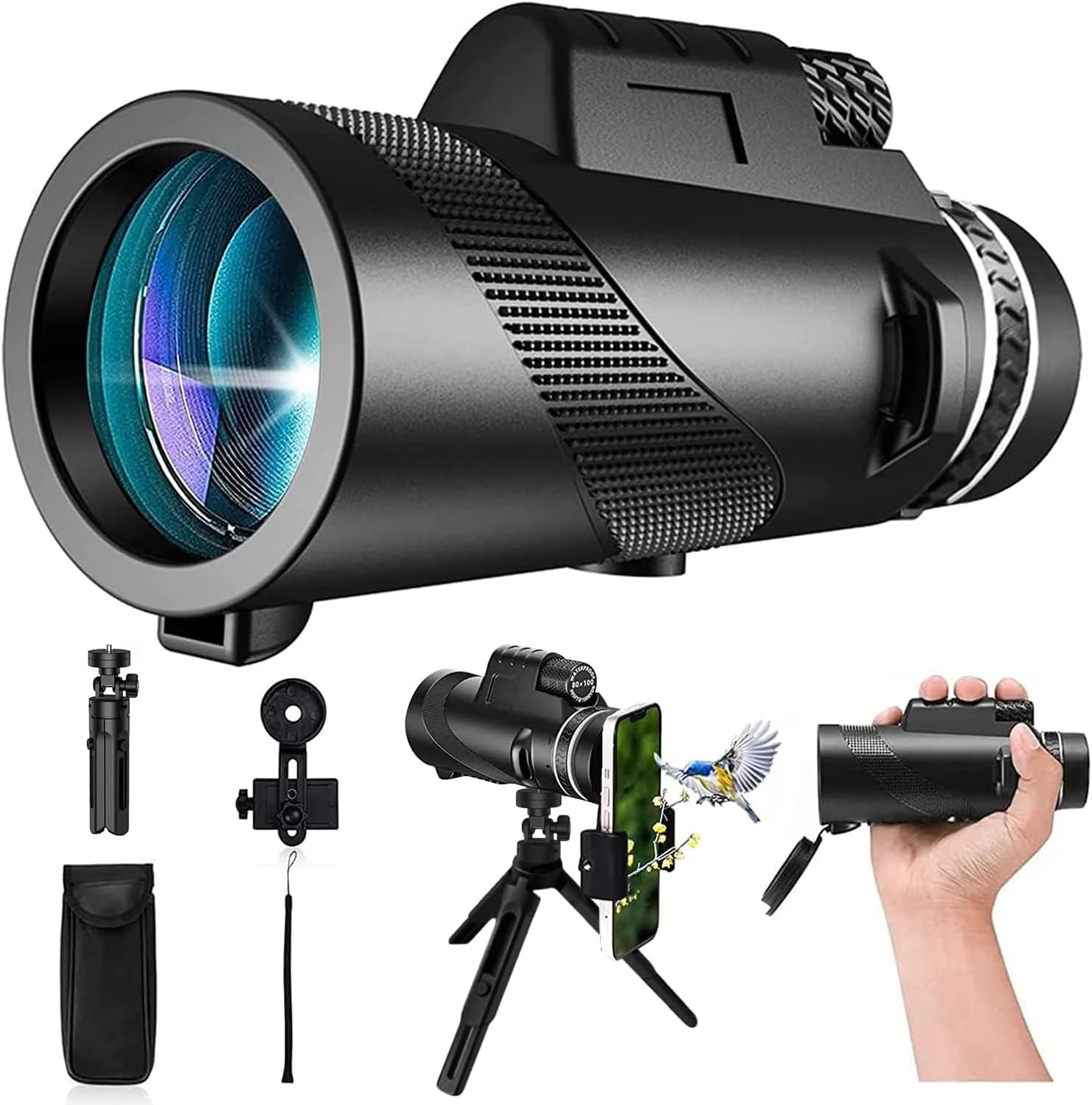
The Amither 80×100 High-Powered Monocular Telescope is a versatile optical device designed for outdoor enthusiasts who want to observe distant objects with greater detail. With its high magnification capability, quality optical components, and smartphone compatibility, it offers a convenient option for bird watching, wildlife observation, sightseeing, and other outdoor activities.
Its combination of a BAK4 prism and fully multi-coated (FMC) optical glass helps produce bright, sharp images with improved light transmission and reduced distortion.
One of its main attractions is its high magnification capability. The manufacturer indicates that the monocular can achieve up to 80x magnification when used with a 10x smartphone lens. This makes it useful for observing distant birds, wildlife, and other objects.
Its dual-focus system allows users to adjust the image more quickly and bring their viewing targets into focus. Additionally, the large objective lens provides a wide viewing angle of up to 7 degrees and a stated field of view of 363 feet at 1,000 yards. This wider viewing area can help users locate and follow birds across open landscapes.
Optical clarity is another important consideration when choosing a monocular for bird watching. The Amither uses a BAK4 prism alongside fully multi-coated optical glass lenses to improve light transmission and image quality.
These optical components help minimize distortion and blurriness while producing brighter, more realistic images. This can be particularly helpful when observing birds in wooded areas, parks, or other environments where lighting conditions vary.
The monocular also supports low-light observation, making it suitable for early-morning bird watching and evening outdoor activities. Its green-coated FMC lens helps collect available light, improving visibility when there is some illumination. However, it is important to understand that this device does not provide true night vision and cannot produce images in complete darkness.
For added stability, the package includes a tripod and smartphone adapter. The tripod helps minimize hand movement, which becomes increasingly important when using high magnification.
Meanwhile, the smartphone adapter allows users to attach compatible Android and iOS devices to capture photographs and videos of their observations. This is particularly useful for bird watchers who enjoy documenting different species and sharing their discoveries.
The Amither 80×100 is suitable for beginner bird watchers, casual wildlife observers, campers, hikers, travelers, and outdoor enthusiasts interested in smartphone photography.
It is particularly useful for people who want an affordable, versatile monocular for occasional long-distance viewing and recording outdoor experiences. However, its very high magnification may make tracking fast-moving birds challenging, so beginners should start with lower magnification settings where available.
Specifications
-
Magnification: Up to 80x with a 10x smartphone lens, according to the manufacturer.
-
Objective Lens: 100mm (as indicated by the 80×100 model designation).
-
Prism Type: BAK4.
-
Lens Coating: Fully Multi-Coated (FMC) with green film coating.
-
Field of View: 363 feet at 1,000 yards.
-
Viewing Angle: Up to 7 degrees.
-
Focusing System: Dual focus.
-
Accessories: Tripod and smartphone adapter.
-
Compatibility: Most Android and iOS smartphones.
Pros
• High magnification capability for observing distant objects.
• BAK4 prism and FMC optics help deliver brighter, clearer images.
• Dual-focus system makes target adjustment easier.
• Includes a tripod and smartphone adapter for photography and video recording.
• Supports low-light viewing when an external light source is available.
• Suitable for bird watching, hiking, camping, sightseeing, and wildlife observation.
Cons
• High magnification can make tracking moving birds difficult.
(2)12×60 HD Best Monocular for Bird Watching
The 12×60 HD Monocular Telescope is designed for outdoor enthusiasts who want a powerful yet portable optical device for observing distant objects. With 12x magnification, a large 60mm objective lens, and quality optical coatings, it offers a practical viewing solution for bird watching, wildlife observation, hiking, sightseeing, and sporting events. Its combination of a BAK4 prism and fully multi-coated (FMC) lenses helps produce bright, detailed images, making it a useful option for beginners and experienced outdoor observers.
One of the main advantages of this monocular is its 12x magnification paired with a 60mm objective lens. This combination allows users to observe distant birds, animals, and landscape details without carrying a full-sized pair of binoculars.
It also features a 6.5-degree viewing angle and a field of view of 325 feet at 1,000 yards. This relatively wide viewing area helps users locate birds and follow their movements across open spaces, although tracking fast-moving species may require some practice at 12x magnification.
The optical system is designed to improve brightness and image clarity. It features a large 21mm BAK4 prism that helps reduce light loss caused by internal reflection. This supports better light transmission and contributes to clear, sharp images with natural-looking colors.
The fully multi-coated glass lenses further improve light transmission while helping minimize reflections and unwanted glare. These features make the monocular suitable for observing birds in parks, forests, wetlands, and other outdoor environments.
Comfort and handling are also important when spending extended periods watching wildlife. The 12×60 monocular has a rubber-armored exterior that provides a secure, non-slip grip while offering additional protection during outdoor use.
Its adjustable twist-up eyecup allows users to customize their viewing position, whether they wear glasses or prefer observing without them. The compact, handheld design also makes it convenient to carry during hiking trips and nature excursions.
Another useful addition is the included smartphone holder and tripod. The smartphone adapter allows users to connect compatible phones for taking photographs and recording videos of distant subjects.
Its quick-alignment design makes installation easier, while the tripod provides additional stability when capturing images or observing stationary birds. This combination is especially helpful for nature enthusiasts who want to document their sightings and share them with others.
The 12×60 HD Monocular Telescope is suitable for beginner and intermediate bird watchers, hikers, wildlife enthusiasts, travelers, and sports spectators. It works particularly well for observing birds and distant scenery in open environments. The smartphone adapter also makes it appealing to users interested in outdoor photography. However, its 12x magnification may benefit from tripod support during extended viewing sessions.
Specifications
-
Magnification: 12x.
-
Objective Lens Diameter: 60mm.
-
Prism Type: 21mm BAK4.
-
Lens Coating: Fully Multi-Coated (FMC).
-
Field of View: 325 feet at 1,000 yards.
-
Viewing Angle: 6.5 degrees.
-
Eyecup: Adjustable twist-up design.
-
Accessories: Smartphone holder and tripod.
-
Body Construction: Rubber-armored exterior.
Pros
• 12x magnification provides detailed views of distant birds and wildlife.
• Large 60mm objective lens supports improved light gathering.
• BAK4 prism and FMC lenses help produce bright, sharp images.
• Wide field of view makes locating distant subjects easier.
• Adjustable eyecup accommodates eyeglass wearers.
• Rubber-armored body provides a comfortable, non-slip grip.
• Smartphone adapter and tripod support photography and stable viewing.
Cons
• 12x magnification can make tracking fast-moving birds challenging.
(3)Gosky 12×55 HDBest Monocular for Bird Watching
The Gosky 12×55 HD Monocular Telescope is a versatile optical device designed for bird watchers and outdoor enthusiasts who want clear, detailed views of distant subjects without carrying bulky binoculars.
Combining 12x magnification, a large 55mm objective lens, and quality optical components, it offers a practical balance of viewing power, brightness, and portability. Its weather-resistant construction and included accessories also make it suitable for nature observation in different outdoor environments.
One of the main advantages of this monocular is its 12x magnification, which brings distant birds and wildlife closer for easier observation. It features a wide field of view of 352 feet at 1,000 yards, giving users a broader viewing area when locating birds in trees, wetlands, grasslands, and open landscapes.
This viewing range helps balance long-distance detail with the ability to find and follow moving subjects. It is also useful for sightseeing, sporting events, and other activities where observing distant objects is important.
The 55mm objective lens is designed to gather more available light, helping maintain image brightness in different viewing conditions. Its 4.58mm exit pupil provides a substantial beam of light to the eye, supporting comfortable observation during daylight, cloudy weather, and shaded conditions. This can be particularly beneficial for bird watchers who prefer early-morning or late-afternoon outings when many bird species are active.
Optical performance is further supported by an 18mm BAK4 prism and fully multi-coated (FMC) optical surfaces. These components help improve light transmission, contrast, and fine-detail visibility while reducing unwanted reflections.
The result is a clearer viewing experience with natural-looking colors, making it easier to observe bird features such as plumage patterns and general body details. Although image quality depends on lighting and viewing conditions, the optical configuration provides a useful combination for everyday wildlife observation.
Durability is another important consideration for outdoor equipment. The Gosky 12×55 features an IPX7 waterproof construction that helps protect its internal optics from rain, splashes, and moisture. Its nitrogen-filled body also helps minimize internal fogging when temperatures change.
Additionally, the rubber-armored exterior provides a more secure grip and extra protection against minor impacts, making it suitable for hiking, camping, and bird watching in unpredictable weather.
The monocular also comes with a tripod and adjustable smartphone adapter. Users can hold it by hand for quick observations or mount it on the tripod for more stable viewing. This is especially helpful because 12x magnification can make small hand movements noticeable. The smartphone adapter accommodates most phones, allowing users to photograph birds and record videos of their outdoor discoveries.
The Gosky 12×55 HD is ideal for beginner and intermediate bird watchers, wildlife enthusiasts, hikers, and travelers who need a weather-resistant monocular with good light-gathering capability. It is particularly suitable for observing birds in open landscapes, shaded environments, and changing weather conditions. Its smartphone compatibility also appeals to nature lovers who enjoy documenting their sightings.
Specifications
-
Magnification: 12x.
-
Objective Lens Diameter: 55mm.
-
Prism Type: 18mm BAK4.
-
Lens Coating: Fully Multi-Coated (FMC).
-
Field of View: 352 feet at 1,000 yards.
-
Exit Pupil: 4.58mm.
-
Waterproof Rating: IPX7.
-
Construction: Nitrogen-filled, rubber-armored body.
-
Accessories: Tripod and adjustable smartphone adapter.
Pros
• 12x magnification provides detailed views of distant birds and wildlife.
• Large 55mm objective lens supports better light gathering.
• BAK4 prism and FMC optics improve brightness, contrast, and image clarity.
• Wide 352-foot field of view helps locate and follow birds.
• IPX7 waterproof construction offers protection against moisture.
• Nitrogen filling helps prevent internal fogging during temperature changes.
• Included tripod and smartphone adapter support stable viewing and photography.
Cons
• A tripod is recommended for extended observation and smartphone photography.
(4)Monocular-Telescope 80×100 Best Monocular for Bird Watching

The Monocular-Telescope 80×100 High Power Telescope is designed for outdoor enthusiasts who want to observe distant objects with greater magnification and detail. Featuring advanced optical technology, a BAK4 prism, and fully multi-coated lenses, this monocular provides a convenient option for bird watching, wildlife observation, sightseeing, and other outdoor activities.
Its handheld design, adjustable focusing system, and included accessories make it suitable for users who want a versatile viewing device without carrying bulky optical equipment.
One of the main attractions of this monocular is its advertised 80×100 magnification configuration, which is designed to bring distant subjects closer for detailed observation. This can be useful when watching birds in trees, observing wildlife across open landscapes, or viewing distant scenery during hiking and camping trips.
However, users should remember that very high magnification can make it more difficult to locate and follow moving birds. A steady viewing position is therefore important, particularly when observing smaller species.
Image quality is supported by a BAK4 prism and fully multi-coated (FMC) optical lenses. These optical components help increase light transmission while reducing glare, reflections, and image distortion.
The improved optical performance contributes to brighter, sharper images with better visibility across different lighting conditions. For bird watchers, this can help reveal details such as general plumage patterns, body shapes, and movements when observing birds at a distance. Actual clarity will still depend on lighting, atmospheric conditions, and the stability of the monocular.
Comfort and handling are also important when spending extended periods outdoors. This model features an ergonomic handheld structure with a rubberized exterior that provides a comfortable, non-slip grip. The rubber covering also offers some protection against everyday handling and minor impacts.
Its smooth focusing adjustment allows users to bring distant subjects into clearer view without complicated setup procedures. This makes it a practical choice for beginners who are learning how to use high-powered optical equipment.
Another useful addition is the included tripod, which helps reduce unwanted movement during extended observation. At high magnification, even small hand movements can affect image stability, so mounting the monocular can make viewing more comfortable.
The accompanying smartphone adapter also allows users to connect most smartphones and use their phone cameras to capture distant scenes. This feature is particularly appealing to bird watchers who enjoy photographing wildlife, recording observations, and sharing their outdoor experiences.
The Monocular-Telescope 80×100 is suitable for beginner bird watchers, outdoor enthusiasts, campers, hikers, travelers, and wildlife observers looking for a high-magnification viewing device. It is particularly useful for stationary observation of distant birds and scenery.
The included tripod and smartphone adapter also make it appealing to users interested in outdoor photography. However, those who regularly track fast-moving birds may prefer a lower-magnification model with a wider field of view.
Specifications
-
Magnification: Advertised 80×100 configuration.
-
Prism Type: BAK4.
-
Lens Coating: Fully Multi-Coated (FMC).
-
Focusing System: Smooth adjustable focus.
-
Body Design: Ergonomic handheld construction.
-
Exterior: Non-slip rubber covering.
-
Accessories: Tripod and smartphone adapter.
-
Compatibility: Most smartphones.
-
Primary Uses: Bird watching, wildlife observation, hiking, camping, and sightseeing.
Pros
• High advertised magnification supports distant-object observation.
• BAK4 prism improves light transmission and image quality.
• FMC lenses help reduce glare, reflections, and distortion.
• Rubberized exterior provides a comfortable, non-slip grip.
• Smooth focusing adjustment makes target viewing easier.
• Included tripod helps minimize movement during extended observation.
• Smartphone adapter allows users to capture photographs and videos.
Cons
• Very high magnification can make tracking moving birds challenging.
(5)15-45×55 High Power Zoom Monocular Telescope
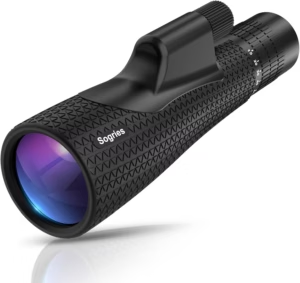
The 15-45×55 High Power Zoom Monocular Telescope is a versatile optical device designed for bird watchers and outdoor enthusiasts who want adjustable magnification for observing distant subjects.
With a variable 15x to 45x zoom range, a 55mm objective lens, and a large BAK4 prism, it offers flexibility for viewing birds, wildlife, landscapes, and sporting events. Its compact construction, comfortable grip, and tripod compatibility also make it a convenient companion for outdoor adventures.
One of its main advantages is the adjustable 15-45x magnification system. At 15x, users can enjoy a wider viewing area to locate birds and follow their movements. When more detail is needed, the magnification can be increased up to 45x for closer observation of distant subjects.
This flexibility allows bird watchers to adjust their viewing experience without carrying multiple optical devices. The monocular also provides a 5.6-degree viewing angle and a field of view of 294 feet at 1,000 yards, offering a useful viewing range for observing wildlife and outdoor scenery.
Optical performance is supported by a large BAK4 prism, which helps improve light transmission and reduce light loss inside the optical system. This contributes to brighter images, sharper details, and more consistent clarity across the viewing area.
The prism design also helps minimize dark edges, color fringing, and image distortion. These qualities are useful when observing birds in different environments, including open fields, wooded areas, and locations with changing light conditions. However, image brightness naturally decreases as magnification increases, particularly in low-light environments.
Portability is another advantage of this monocular. Measuring approximately 9.57 x 3.46 x 2.56 inches and weighing 1.08 pounds, it is relatively easy to carry during hiking, camping, mountaineering, and wildlife observation trips.
Its one-handed operation allows users to make quick adjustments while exploring outdoors. The rotating eyecup also accommodates different viewing preferences. Eyeglass wearers can screw the eyecup down, while those observing without glasses can extend it for a more comfortable viewing position.
For outdoor durability, the monocular features a textured rubber exterior that provides a secure grip, including in damp conditions. It comes with a wrist strap and carrying bag for easier transportation and storage.
Additionally, the built-in tripod connection allows users to attach a compatible tripod for improved stability during extended observation. This is particularly important when using higher magnification, as small hand movements can make distant birds difficult to follow.
The 15-45×55 Zoom Monocular is suitable for beginner and intermediate bird watchers, wildlife enthusiasts, hikers, campers, and travelers who want flexible magnification in a portable design. It is especially useful for observing distant birds and identifying wildlife in open environments. Its adjustable eyecup and tripod compatibility also make it practical for extended viewing sessions.
Specifications
-
Magnification: Adjustable 15x-45x.
-
Objective Lens Diameter: 55mm.
-
Prism Type: BAK4.
-
Field of View: 294 feet at 1,000 yards.
-
Viewing Angle: 5.6 degrees.
-
Dimensions: 9.57 x 3.46 x 2.56 inches.
-
Weight: 1.08 pounds.
-
Eyecup: Adjustable rotating design.
-
Accessories: Wrist strap and carrying bag; tripod connection included.
Pros
• Adjustable 15-45x magnification provides flexible viewing options.
• Large 55mm objective lens supports light gathering.
• BAK4 prism helps deliver bright, sharp images with reduced distortion.
• Compact design makes it convenient for outdoor transportation.
• Adjustable eyecup accommodates users with or without glasses.
• Textured rubber exterior provides a secure, comfortable grip.
• Tripod compatibility supports more stable long-distance observation.
• Includes a wrist strap and carrying bag.
Cons
• Higher magnification can make tracking moving birds more difficult.
(6)Nocs Provisions Zoom Tube 8×32 Monocular
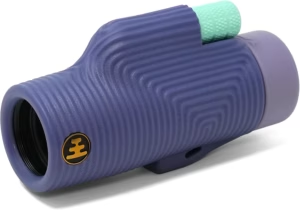
The Nocs Provisions Zoom Tube 8×32 Monocular is a compact and lightweight optical device designed for bird watchers, hikers, travelers, and outdoor enthusiasts who value portability and image clarity. Featuring 8x magnification, fully multi-coated optics, and a Swiss-designed BaK4P prism, it provides bright, detailed views of distant subjects without the bulk of traditional binoculars.
Weighing just 9.5 ounces, this monocular is easy to carry during outdoor adventures, making it a practical choice for people who enjoy spontaneous wildlife observation and nature exploration.
One of its main advantages is its optical system, which combines fully multi-coated lenses with a BaK4P prism. The multiple anti-reflective coatings help improve light transmission, reduce unwanted reflections, and produce clearer images with natural-looking colors.
This optical arrangement also supports edge-to-edge image clarity, allowing users to observe distant birds and wildlife with greater detail. Its 8x magnification provides a useful balance between image enlargement and viewing stability, making it easier to locate and follow birds compared with some higher-powered monoculars.
The Zoom Tube also offers a generous field of view of 384 feet at 1,000 yards. This wider viewing area is particularly helpful for bird watching because it allows users to scan trees, open fields, and natural habitats more comfortably. Whether observing birds perched on branches or following wildlife across a landscape, the broad viewing range helps users locate their subjects without constantly repositioning the monocular.
Portability is another important consideration, especially for people who spend long hours outdoors. Measuring compactly and weighing only 9.5 ounces, the Zoom Tube fits conveniently into a backpack or travel bag.
Its patented Rugged Wave Grip design provides a comfortable, non-slip hold, while the impact-resistant housing helps protect the optical system during everyday outdoor use. The scratch-resistant construction also contributes to its suitability for regular travel and adventure activities.
Weather protection makes this monocular useful in changing outdoor conditions. It carries an IPX4 water-resistance rating, meaning it can withstand splashes and water exposure from different directions. This makes it suitable for bird watching during light rain, foggy mornings, and other damp conditions. However, it should not be submerged in water.
Comfort is further improved by its multi-position twist-up eyecup, which offers three adjustment settings for users who wear glasses and those who observe without them.
A central focusing mechanism allows quick image adjustments, while the built-in 1/4-inch-20 tripod connection supports more stable viewing during extended observation. The monocular can also accommodate smartphone photography and videography, allowing users to capture and share memorable wildlife sightings.
The Nocs Provisions Zoom Tube 8×32 is particularly suitable for beginner and intermediate bird watchers, hikers, campers, travelers, and wildlife enthusiasts who prioritize portability and comfortable viewing. Its 8x magnification and wide field of view make it especially useful for tracking birds in forests, gardens, parks, and open landscapes.
Specifications
-
Magnification: 8x.
-
Objective Lens Diameter: 32mm.
-
Prism Type: Swiss-designed BaK4P.
-
Lens Coating: Fully Multi-Coated optics.
-
Field of View: 384 feet at 1,000 yards.
-
Weight: 9.5 ounces.
-
Water Resistance: IPX4.
-
Eyecup: Three-position twist-up design.
-
Tripod Compatibility: Built-in 1/4-inch-20 threaded adapter.
Pros
• Lightweight 9.5-ounce construction makes it easy to carry.
• 8x magnification provides comfortable viewing and easier bird tracking.
• Fully multi-coated optics improve brightness and color clarity.
• Wide 384-foot field of view helps locate moving birds.
• IPX4 water resistance supports use in light rain and damp conditions.
• Three-position eyecup accommodates eyeglass wearers.
• Rugged exterior provides a comfortable grip and impact protection.
• Tripod compatible and suitable for smartphone photography.
Cons
• Smartphone photography may require careful alignment for clear results.
(7)Nocs Provisions Field Tube 10×32 Monocular
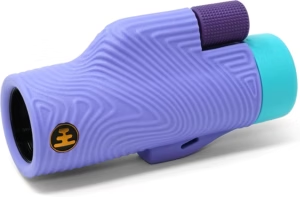
The Nocs Provisions Field Tube 10×32 Monocular is a compact, rugged optical device designed for bird watchers, wildlife enthusiasts, hikers, and outdoor adventurers who need reliable viewing performance in different environments.
Combining 10x magnification, a 32mm objective lens, and a Swiss-designed BaK4P prism, it provides detailed views of distant subjects while maintaining a lightweight and portable design. Weighing just 8.09 ounces, this monocular is convenient to carry during nature walks, camping trips, bird-watching excursions, and travel.
One of its main advantages is its 10x magnification, which brings distant birds and wildlife closer for more detailed observation. It offers a field of view of 333 feet at 1,000 yards, allowing users to scan natural habitats and locate birds without constantly repositioning the device.
This viewing range is useful when observing birds perched on branches, wildlife moving through open fields, or animals in wooded environments. Its oversized focus wheel also allows precise adjustments, with a close-focus distance of approximately 9.3 feet and the ability to focus on distant subjects up to infinity.
Optical clarity is supported by a Swiss-designed BaK4P prism and fully multi-coated lenses. These components are designed to improve light transmission, enhance color representation, and produce bright, sharp images across the viewing area.
The multi-layer coatings also help minimize unwanted reflections, contributing to clearer observations of bird features and wildlife details. The optical system makes this monocular suitable for daytime bird watching, sightseeing, and general outdoor observation.
Durability is another important advantage of the Field Tube 10×32. Unlike basic monoculars that offer limited protection against moisture, this model carries an IPX7 waterproof rating. Its sealed construction allows it to withstand immersion in up to three feet of water for approximately 30 minutes under the stated rating conditions.
The nitrogen-filled interior and medical-grade O-ring seals help prevent internal fogging and condensation when temperatures and humidity levels change. This makes it a dependable option for bird watchers exploring wetlands, forests, and locations where rain or moisture is common.
Comfortable handling is supported by the patented Rugged Wave Grip design, which provides a secure, non-slip hold. Its impact-resistant housing adds protection during everyday outdoor use.
The three-position twist-up eyecup accommodates people who wear glasses as well as those who prefer viewing without them. Additionally, the monocular supports smartphone photography and videography, allowing users to align their phones with the eyepiece to capture distant birds and wildlife.
The Nocs Provisions Field Tube 10×32 is ideal for beginner and intermediate bird watchers, hikers, campers, travelers, and wildlife enthusiasts who need a lightweight but durable optical device. It is particularly suitable for outdoor observation in wet or humid environments. Its 10x magnification and precise focusing system also make it useful for users who want to examine distant birds and wildlife more closely.
Specifications
-
Magnification: 10x.
-
Objective Lens Diameter: 32mm.
-
Prism Type: Swiss-designed BaK4P.
-
Lens Coating: Fully Multi-Coated optics.
-
Field of View: 333 feet at 1,000 yards.
-
Close Focus Distance: 9.3 feet.
-
Weight: 8.09 ounces.
-
Waterproof Rating: IPX7, submersible up to 3 feet for 30 minutes.
-
Eyecup: Three-position twist-up design.
Pros
• Lightweight 8.09-ounce construction makes it convenient for travel and hiking.
• 10x magnification provides detailed views of distant birds and wildlife.
•BaK4P prism and fully multi-coated optics support bright, sharp images.
• Wide 333-foot field of view helps locate and observe birds.
• Oversized focus wheel allows precise focusing adjustments.
• IPX7 waterproof construction protects against water exposure.
• Nitrogen sealing helps prevent internal fogging and condensation.
• Comfortable rubber grip and adjustable eyecup improve handling.
Cons
• The 32mm objective lens gathers less light than larger monocular lenses.
Read Also:5 Best Monocular for Hiking
Advantages of the Best Monocular for Bird Watching
1. Enhanced Magnification for Detailed Bird Observation
One of the biggest advantages of a bird-watching monocular is its ability to magnify distant subjects, making it easier to observe birds without disturbing them. Depending on the model, magnification options such as 8x, 10x, 12x, and adjustable zoom provide different levels of viewing detail.
Higher magnification helps users examine features such as feather patterns, body shapes, and general markings that may be difficult to see with the naked eye. This is particularly useful when observing birds perched high in trees, flying across open landscapes, or resting near wetlands.
2. Lightweight and Portable Design
Monoculars are generally smaller and lighter than traditional binoculars, making them convenient for outdoor activities. Their compact construction allows bird watchers to carry them in a backpack, travel bag, or even a jacket pocket, depending on the model.
For example, lightweight options such as the Nocs Provisions Field Tube 10×32, which weighs approximately 8.09 ounces, are easy to take along on long nature walks and hiking trips. This portability allows users to explore different bird habitats without carrying heavy equipment or feeling weighed down during extended outdoor adventures.
3. Improved Image Clarity and Brightness
Quality monoculars use advanced optical components, including BAK4 or BaK4P prisms and fully multi-coated lenses, to improve image brightness, sharpness, and color reproduction. These optical features help increase light transmission while reducing reflections, glare, and image distortion.
A brighter, clearer image makes it easier to distinguish bird features and observe wildlife in different environments. Larger objective lenses, such as the 55mm and 60mm options found in some models, can also gather more available light, supporting observation during cloudy conditions, early mornings, and late afternoons.
4. Versatility for Different Outdoor Activities
Although monoculars are popular among bird watchers, they are useful for many other outdoor activities. The same device can be used for wildlife observation, hiking, camping, sightseeing, hunting, stargazing, and watching sporting events.
Some models also include smartphone adapters and tripods, allowing users to photograph or record distant subjects. Weather-resistant options, such as the Nocs Provisions Field Tube 10×32 with its IPX7 waterproof rating, are particularly useful for outdoor enthusiasts who explore forests, wetlands, and other environments where moisture and changing weather conditions are common.
5. Affordable and Convenient Alternative to Binoculars
A monocular provides a practical way to enjoy magnified outdoor viewing without investing in larger or more complicated optical equipment. Its compact, straightforward design makes it suitable for beginners who are learning bird identification and wildlife observation.
Many models also include useful accessories such as carrying cases, wrist straps, smartphone adapters, and tripods, adding convenience and functionality. With different magnification levels, optical specifications, and price ranges available, bird watchers can choose a monocular that matches their viewing needs, outdoor activities, and budget.
Overall, the best monoculars for bird watching combine portability, useful magnification, quality optics, versatility, and convenience. These advantages make them valuable companions for anyone who enjoys exploring nature and observing birds more closely.
Factors to Consider When Choosing the Best Monocular for Bird Watching
1. Magnification and Field of View
Magnification determines how much closer distant birds appear when viewed through a monocular. Common options include 8x, 10x, and 12x magnification, while some models offer adjustable zoom for greater flexibility. Higher magnification can reveal more details, but it also makes image movement more noticeable and can make tracking flying birds difficult.
Field of view is equally important because it determines how much of the surrounding area you can see at once. A wider field of view makes it easier to locate birds, follow their movements, and observe them in open habitats. For general bird watching, a balance between magnification and viewing width is more useful than choosing the highest available magnification.
2. Objective Lens Diameter and Light Gathering
The objective lens is the front lens of a monocular, and its diameter affects how much light enters the optical system. Larger objective lenses generally collect more light, helping produce brighter images in shaded environments and during early-morning or late-afternoon bird-watching sessions.
Common sizes include 25mm, 32mm, 42mm, 55mm, and 60mm. Although larger lenses can improve light gathering, they also tend to increase the size and weight of the device. Consider where and when you plan to observe birds before selecting an objective lens diameter. A 32mm or 42mm lens can provide a practical balance between portability and viewing performance, while larger lenses may be preferable for users who prioritize brightness.
3. Optical Quality and Lens Coatings
Optical quality directly affects how clearly you can observe distant birds and identify their physical features. Look for monoculars equipped with quality prisms, such as BAK4 or BaK4P, which help improve light transmission and image sharpness.
Fully multi-coated (FMC) lenses are also worth considering because their multiple anti-reflective layers help reduce unwanted reflections and improve brightness, contrast, and color reproduction. Good optical quality makes it easier to distinguish feather patterns, natural colors, and other identifying details. When comparing different models, pay attention to both the prism construction and lens coatings rather than relying entirely on advertised magnification.
4. Weight, Size, and Ergonomic Design
Bird watching often involves walking through forests, wetlands, nature reserves, and open landscapes, making portability an important consideration. A lightweight, compact monocular is easier to carry during long outdoor excursions and can be stored conveniently in a backpack or travel bag. You should also consider the grip and focusing mechanism.
A rubber-armored exterior provides a more secure hold, while a smooth focusing wheel allows quick adjustments when birds move between different distances. An adjustable eyecup is another useful feature, particularly for people who wear glasses. Choosing a comfortable monocular reduces handling fatigue and makes extended observation more enjoyable.
5. Waterproofing, Fogproofing, and Durability
Bird watchers frequently encounter changing weather conditions, including rain, humidity, morning dew, and temperature fluctuations. A durable monocular should have adequate protection against these environmental challenges. Look for waterproof construction and sealed housing that prevent moisture from entering the optical system.
Nitrogen or argon purging is also beneficial because it helps minimize internal fogging and condensation when temperatures change. Rubber-armored bodies provide additional protection against minor impacts and improve grip in damp conditions. If you regularly explore wetlands, forests, or mountainous environments, choosing a weather-resistant monocular can help ensure reliable performance during outdoor adventures.
6. Tripod Compatibility and Additional Accessories
Accessories can improve the convenience and functionality of a monocular, particularly during extended bird-watching sessions. A tripod connection is useful because it helps stabilize the image and reduces hand movement, especially when using higher magnification.
Some models also include smartphone adapters that allow users to capture photographs and videos of distant birds. Other useful accessories include carrying cases, protective covers, lens-cleaning cloths, and wrist straps. Before purchasing, check which accessories are included and whether the monocular supports standard tripod connections. These additional features can make observing, documenting, and sharing your bird-watching experiences much easier.
3 Best Monocular for Bird Watching FAQs
1. What magnification is best for bird watching with a monocular?
For general bird watching, 8x to 12x magnification is usually a good choice. An 8x monocular provides a wider field of view and makes it easier to follow birds in flight, while 10x and 12x options bring distant birds closer for more detailed observation. Higher magnification can be useful for stationary birds at long distances, but it may require tripod support to maintain image stability.
2. What features should I look for in a monocular for bird watching?
Look for a monocular with quality BAK4 or BaK4P prisms, fully multi-coated lenses, and a suitable objective lens diameter for good image brightness. A wide field of view helps you locate and track moving birds, while smooth focusing and adjustable eyecups improve viewing comfort. Waterproof and fogproof construction is also beneficial for outdoor use. Smartphone compatibility and tripod support are useful extras for capturing bird photographs and enjoying more stable observations.
3. Are monoculars better than binoculars for bird watching?
Monoculars and binoculars both have advantages for bird watching, depending on your preferences. Monoculars are generally lighter, more compact, easier to carry, and convenient for quick observations during hiking and travel. Binoculars provide viewing through both eyes, which many people find more comfortable for extended observation and judging depth. A monocular is an excellent choice if portability and convenience are your priorities, while binoculars may be preferable for long bird-watching sessions.