
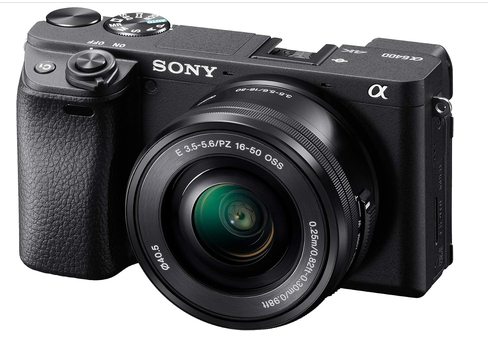
Ready to take your photography skills to the next level? Choosing the Best Beginner Mirrorless Cameras can make all the difference when learning to capture beautiful photographs and create high-quality videos. I understand that finding the right camera can be challenging, especially with so many options available.
That’s why I’ve explored beginner-friendly models that offer essential features such as high-resolution APS-C sensors, fast and accurate autofocus, interchangeable lenses, 4K video recording, image stabilization, and easy-to-use touchscreen displays.
I’ve also considered portability, battery life, wireless connectivity, and overall versatility to help you find a camera that matches your photography needs and budget. In this guide, I’ll introduce my top picks for the best beginner mirrorless cameras, highlight their key features, and explain what makes each option worth considering. I’ll also share a helpful buying guide covering the important factors to consider before purchasing, followed by frequently asked questions to help you make a confident and informed decision.
6 Best Beginner Mirrorless Cameras
(1)Sony Alpha a6400 Mirrorless Camera with 16–50mm Lens
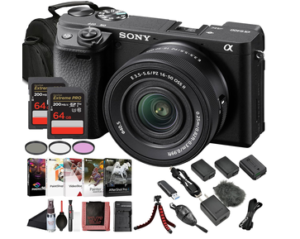
The Sony Alpha a6400 Mirrorless Camera with 16–50mm Lens is a versatile option for beginners looking to develop their photography and videography skills without investing in a bulky professional camera. It combines a 24.2MP APS-C Exmor CMOS sensor, advanced image processing, 4K video recording, and a compact interchangeable-lens design.
These features make it suitable for users who want to explore different photography styles while having access to creative video tools.
One of its main advantages is its 24.2MP APS-C sensor, which captures detailed images with natural colors and a wide dynamic range. Whether you are photographing landscapes, portraits, family occasions, or everyday subjects, the camera provides plenty of resolution for sharing and editing photographs.
Its advanced image processor also helps deliver clear results in different lighting conditions, including situations where available light is limited. This makes it a practical choice for beginners learning how to adjust exposure, experiment with composition, and improve their photography techniques.
The included 16–50mm OSS power zoom lens adds flexibility for everyday shooting. Its wide-to-standard focal length range works well for landscapes, travel photography, portraits, and casual video recording.
Optical SteadyShot stabilization helps reduce the effects of camera shake when shooting handheld, making it easier to capture steady images and footage without always needing a tripod. The compact lens also complements the lightweight camera body, making the complete setup convenient to carry.
For video creators, the Sony a6400 offers oversampled 4K recording with full pixel readout and no pixel binning. This allows users to capture detailed footage for YouTube videos, travel content, interviews, and other creative projects. It also includes S-Log2, S-Log3, and Hybrid Log-Gamma profiles, providing additional flexibility for users interested in color grading and HDR video production.
The 180-degree tilting touchscreen is particularly useful for vloggers and solo creators who need to monitor their framing while recording themselves.
Another useful aspect is its magnesium alloy construction, which provides a durable yet lightweight body for regular use. Built-in Wi-Fi, NFC, and Bluetooth make transferring images to compatible smartphones more convenient through Sony’s Imaging Edge application. USB and HDMI connections also provide options for live streaming and connecting external recording equipment.
This particular bundle offers additional value by including two 64GB memory cards, two NP-FW50 batteries, a 40.5mm filter kit, and Photo Video Art Suite software. It gives beginners several useful accessories to get started with photography and video creation.
The Sony Alpha a6400 is best suited for beginner photographers, aspiring vloggers, travel enthusiasts, students, and content creators who want a compact camera that supports both photography and video. Although its advanced recording and customization options may require some learning, it offers room to develop skills over time.
Specifications
| Feature | Details |
|---|---|
| Camera type | Mirrorless |
| Sensor | 24.2MP APS-C Exmor CMOS |
| Lens included | 16–50mm OSS power zoom |
| Image stabilization | Optical SteadyShot in lens |
| Video resolution | 4K |
| Screen | 180-degree tilting touchscreen |
| Connectivity | Wi-Fi, NFC, Bluetooth |
| Body construction | Magnesium alloy |
| Ports | USB and HDMI |
Pros
• High-resolution 24.2MP sensor produces detailed photographs.
• Oversampled 4K recording supports high-quality video creation.
• Included 16–50mm lens offers versatility for everyday photography.
• Optical image stabilization helps with handheld shooting.
• Lightweight construction makes it convenient for travel.
• Tilting touchscreen is useful for selfies and vlogging.
• Bundle includes extra batteries, memory cards, and accessories.
Cons
• The small body may feel less comfortable for users with larger hands.
(2)Nikon Z 50 Mirrorless Digital Camera with 16–50mm Lens Bundle
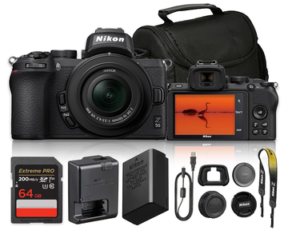
The Nikon Z 50 Mirrorless Digital Camera with 16–50mm Lens Bundle Kit is a versatile camera designed for beginners who want to improve their photography and explore video creation.
Combining a 20.9MP DX-format CMOS sensor, an advanced EXPEED 6 image processor, and a compact interchangeable-lens design, it provides a useful balance of image quality, portability, and creative control. The bundle also includes a camera bag and a 64GB memory card, giving new photographers essential accessories for getting started.
The camera’s 20.9MP DX-format CMOS sensor captures detailed photographs with natural colors and good image quality across different shooting conditions. Whether you enjoy taking landscape photographs, capturing family occasions, photographing wildlife, or documenting everyday activities, the sensor provides sufficient resolution for a variety of creative projects.
Its EXPEED 6 image processor supports responsive performance and helps the camera handle different lighting situations.
Another useful feature is its 209-point Hybrid Autofocus system with Eye Detection AF. This system helps maintain focus on people and moving subjects, making portrait photography and action shooting more manageable. For beginners learning to photograph moving objects, the camera’s continuous shooting speed of up to 11 frames per second provides more opportunities to capture the right moment. This is particularly helpful for sports, wildlife, pets, and spontaneous family photographs.
The included NIKKOR Z DX 16–50mm f/3.5–6.3 VR lens offers a versatile focal range equivalent to approximately 24–75mm in full-frame terms. It works well for landscapes, street photography, portraits, travel, and everyday shooting. Its built-in Vibration Reduction technology provides up to 4.5 stops of optical image stabilization, helping reduce camera shake when photographing handheld. The compact lens also makes the complete camera setup convenient to carry during trips and outdoor activities.
For aspiring content creators, the Nikon Z50 supports UHD 4K video recording at up to 30 frames per second and Full HD recording at up to 120 frames per second for slow-motion footage. Additional features include time-lapse recording, in-camera video trimming, Creative Picture Controls, and Special Effects modes. These options allow beginners to experiment with different video styles and develop their editing and storytelling skills.
The camera also features a 3.2-inch touchscreen that tilts 180 degrees, making it useful for selfies, vlogging, and creative shooting angles. Its bright OLED electronic viewfinder provides another way to compose photographs, while the weather-resistant magnesium alloy body offers durability for regular photography outings.
This Nikon Z50 bundle is particularly suitable for beginner photographers, travel enthusiasts, students, vloggers, and hobbyists who want an easy-to-carry camera for both photographs and videos. It offers enough advanced features to support users as their photography skills improve.
Specifications
| Feature | Details |
|---|---|
| Camera type | Mirrorless |
| Sensor | 20.9MP DX-format CMOS |
| Image processor | EXPEED 6 |
| Included lens | NIKKOR Z DX 16–50mm f/3.5–6.3 VR |
| Autofocus | 209-point Hybrid AF with Eye Detection |
| Continuous shooting | Up to 11 fps |
| Video resolution | UHD 4K at 30fps |
| Display | 3.2-inch 180-degree tilting touchscreen |
| Connectivity/output | HDMI output |
Pros
• 20.9MP sensor delivers detailed photographs.
• Fast 11 fps continuous shooting supports action photography.
• Eye Detection AF helps capture focused portraits.
• Versatile 16–50mm lens suits different everyday photography needs.
• Optical image stabilization helps reduce camera shake.
• 4K video and Full HD slow-motion recording offer creative flexibility.
• Tilting touchscreen makes selfies and vlogging easier.
• Bundle includes a camera bag and 64GB memory card.
Cons
• The 16–50mm lens has limited reach for distant wildlife and sports photography.
(3)Canon EOS R100 RF-S 18–45mm Lens
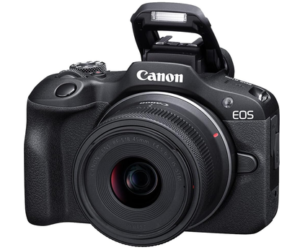
The Canon EOS R100 Mirrorless Camera with RF-S 18–45mm Lens and Wide-Angle Accessories is a beginner-friendly camera bundle designed for people who want to explore photography and video recording without purchasing every accessory separately. It combines a 24.2MP APS-C CMOS sensor, a DIGIC 8 image processor, and an interchangeable-lens system in a compact body.
With its included standard zoom lens and additional photography accessories, this package provides a convenient starting point for learning photography, capturing everyday moments, and experimenting with different shooting styles.
The 24.2MP APS-C CMOS sensor delivers detailed photographs suitable for portraits, landscapes, family occasions, travel, and general everyday photography. Working alongside the DIGIC 8 image processor, it helps produce clear images with natural-looking colors. The camera also gives beginners an opportunity to explore interchangeable lenses and gradually develop their understanding of composition, exposure, and creative photography.
The included Canon RF-S 18–45mm f/4.5–6.3 IS STM lens offers a practical focal range for everyday shooting. It can be used for landscape photography, portraits, street scenes, and travel pictures. Its built-in optical image stabilization helps minimize the effects of camera shake when shooting handheld.
The bundle also includes a 0.43x wide-angle macro attachment and a 2.2x telephoto attachment, giving users additional ways to experiment with wider compositions and magnified subjects. These accessories provide more shooting options without immediately requiring additional standalone lenses.
For video recording, the Canon EOS R100 supports 4K recording at 24 frames per second, although 4K footage uses a crop. It also records Full HD video at up to 60 frames per second, making it useful for everyday videos, family recordings, and beginner content creation.
Its Dual Pixel CMOS autofocus system with 143 autofocus zones helps maintain focus on subjects, making photography and video recording more manageable for new users. The electronic shutter also supports continuous shooting at up to 6.5 frames per second, which is useful for capturing movement and spontaneous moments.
The camera features a 2.36-million-dot OLED electronic viewfinder for composing photographs and a 3-inch LCD screen for reviewing images and navigating settings. Built-in Wi-Fi and Bluetooth connectivity make it easier to connect the camera to compatible devices for transferring photographs and sharing content.
Another advantage of this package is its extensive collection of accessories. It includes a full-size tripod, tabletop tripod, digital slave flash, camera bag, 64GB SanDisk memory card, card reader, protective filters, cleaning kit, screen protectors, and additional lens attachments. These extras make the bundle appealing to beginners who want several photography essentials in one purchase.
The Canon EOS R100 is particularly suitable for beginner photographers, students, families, hobbyists, and travelers who want an affordable entry into interchangeable-lens photography. It is also useful for people learning basic video creation and experimenting with different photography accessories.
Specifications
| Feature | Details |
|---|---|
| Camera type | Mirrorless |
| Sensor | 24.2MP APS-C CMOS |
| Image processor | DIGIC 8 |
| Included lens | RF-S 18–45mm f/4.5–6.3 IS STM |
| Autofocus | Dual Pixel CMOS AF, 143 zones |
| Continuous shooting | Up to 6.5 fps |
| Video recording | 4K 24p, Full HD 60p |
| Viewfinder | 2.36-million-dot OLED EVF |
| Connectivity | Wi-Fi and Bluetooth |
Pros
• 24.2MP sensor captures detailed photographs.
• Compact mirrorless design is convenient for everyday use and travel.
• Included 18–45mm lens supports different photography activities.
• Dual Pixel CMOS autofocus helps maintain subject focus.
• Supports 4K and Full HD video recording.
• Wi-Fi and Bluetooth provide convenient wireless connectivity.
• Extensive bundle includes a tripod, camera bag, flash, and memory card.
• Additional lens attachments offer more creative shooting possibilities.
Cons
• Beginners interested in advanced video production may eventually need a more capable camera.
(4)Sony Alpha a6400 Best Beginner Mirrorless Cameras

The Sony Alpha a6400 Mirrorless Camera is a compact digital camera designed for photography enthusiasts and beginners who want to develop their skills while enjoying advanced autofocus and video recording capabilities.
Its interchangeable-lens design, high-speed shooting performance, and flexible screen make it suitable for different creative activities. Whether you are interested in portraits, travel photography, family pictures, or content creation, this camera provides several useful tools for capturing high-quality images and videos.
One of the camera’s key specifications is its 24.2MP APS-C CMOS sensor, which captures detailed photographs with natural-looking colors. It provides sufficient resolution for everyday photography, landscapes, portraits, and other creative projects. The camera also features an advanced image processing system that helps maintain image clarity and supports responsive performance when photographing different subjects.
Autofocus performance is another important consideration for beginners. The Sony a6400 features a 425-point phase-detection autofocus system and 425-point contrast-detection system. These focus points cover approximately 84% of the image sensor, helping the camera identify and track subjects across much of the frame.
Its Real-Time Eye Autofocus technology is particularly useful for portrait photography because it helps maintain focus on a person’s eyes. This makes capturing sharp portraits and spontaneous photographs easier, especially when photographing people who are moving.
The camera also supports continuous shooting at up to 11 frames per second, allowing users to capture multiple images in quick succession. This is useful for photographing pets, sports, children, wildlife, and other subjects that do not remain still. Its ability to record RAW photographs also provides additional flexibility for users who want to edit their images and adjust colors, exposure, and other settings during post-processing.
For video creators, the Sony a6400 offers 4K video recording and several creative movie functions. Users can produce time-lapse sequences as well as slow-motion and quick-motion videos without relying entirely on external editing software.
The tiltable LCD screen provides convenient framing options for photography, vlogging, and video recording. It is particularly helpful for content creators who frequently record themselves or need to shoot from different camera angles.
Another useful aspect is its compact design, which makes it convenient to carry during travel, outdoor activities, and everyday photography. The included ZEISS Vario-Sonnar T 24–70mm F1.8–2.8 lens offers a versatile focal range for portraits, landscapes, and general shooting. Its wide maximum aperture also provides flexibility when photographing in lower-light conditions and creating background separation.
The package includes a rechargeable NP-FW50 battery, AC adaptor, shoulder strap, body cap, accessory shoe cap, eyepiece cup, and micro USB cable. These accessories provide the basic equipment needed to start using the camera.
Overall, the Sony Alpha a6400 is suitable for beginner photographers, aspiring vloggers, travel enthusiasts, and hobbyists who want a portable camera with advanced focusing capabilities. Its combination of detailed imaging, fast autofocus, and flexible video features makes it a practical option for learning photography while exploring more creative projects.
Specifications
| Feature | Details |
|---|---|
| Camera type | Mirrorless |
| Sensor | 24.2MP APS-C CMOS |
| Lens | ZEISS Vario-Sonnar T 24–70mm F1.8–2.8 |
| Autofocus | 425 phase-detection and 425 contrast-detection points |
| Subject tracking | Real-Time Eye AF |
| Continuous shooting | Up to 11 fps |
| Video recording | 4K |
| Display | Tiltable LCD screen |
| Metering | 1200-zone evaluative metering |
Pros
• 24.2MP sensor captures detailed photographs.
• Advanced Eye Autofocus helps produce sharp portraits.
• Extensive autofocus coverage supports subject tracking.
• Up to 11 fps continuous shooting is useful for moving subjects.
• 4K video recording supports creative content production.
• Slow-motion, quick-motion, and time-lapse functions offer additional video options.
• Tiltable LCD screen makes different shooting angles easier.
• Compact design is convenient for travel and everyday photography.
Cons
• The tiltable screen offers less positioning flexibility than a fully articulating display.
(5)Canon EOS R10 Best Beginner Mirrorless Cameras
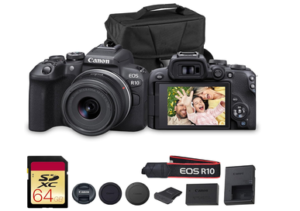
The Canon EOS R10 Mirrorless Camera with 18–45mm Lens (5331C009) Bundle is an excellent option for beginners who want a versatile camera for learning photography, recording videos, and creating digital content. It combines a 24.2MP APS-C CMOS sensor, a powerful DIGIC X image processor, and advanced autofocus technology in a lightweight mirrorless body.
The bundle also includes an RF-S 18–45mm lens, a 64GB memory card, and a shoulder bag, providing useful accessories for photographers starting their creative journey.
One of the main advantages of the Canon EOS R10 is its ability to capture detailed photographs with natural-looking colors. Its 24.2MP APS-C sensor produces high-resolution images suitable for portraits, landscapes, travel photography, family occasions, and everyday shooting.
The DIGIC X processor supports responsive image processing, while the ISO range of 100–32,000 provides flexibility when photographing in different lighting conditions. This makes the camera useful for beginners who want to experiment with indoor photography, outdoor scenes, and low-light environments.
Autofocus performance is another reason to consider this camera. Canon’s Dual Pixel CMOS AF II technology helps identify and track people, animals, and vehicles, making it easier to maintain focus on moving subjects. This is particularly useful for wildlife photography, sports, pets, and family activities.
The camera also supports continuous shooting at up to 15 frames per second with the mechanical shutter and 23 frames per second with the electronic shutter. These speeds give beginners more opportunities to capture fast-moving subjects and spontaneous moments.
The included RF-S 18–45mm IS STM lens provides a practical focal range for everyday photography. It works well for landscapes, portraits, street photography, and travel pictures. Its optical image stabilization helps reduce blur caused by camera movement, while the quiet autofocus motor makes it suitable for video recording.
As users develop their photography skills, the camera’s compatibility with Canon RF-S and RF lenses allows them to explore additional focal lengths and specialized photography techniques.
For video enthusiasts, the Canon EOS R10 offers oversampled 4K recording at 30 frames per second and 4K recording at up to 60 frames per second. These options provide flexibility for recording travel videos, tutorials, vlogs, and creative projects. Its vari-angle touchscreen is especially useful for recording yourself, capturing overhead shots, and experimenting with different camera positions.
Portability is another benefit. Weighing under 430g, the camera is comfortable to carry during photography outings and travel. Its deep grip, touchscreen controls, and dual dials provide convenient handling for beginners. Wi-Fi and Bluetooth connectivity also make transferring photographs to compatible devices and controlling the camera remotely easier.
The Canon EOS R10 bundle is particularly suitable for beginner photographers, students, travel enthusiasts, aspiring vloggers, and content creators who want a camera that can support their developing skills. It combines approachable controls with advanced capabilities, making it useful beyond basic photography.
Specifications
| Feature | Details |
|---|---|
| Camera type | Mirrorless |
| Sensor | 24.2MP APS-C CMOS |
| Image processor | DIGIC X |
| ISO range | 100–32,000 |
| Included lens | RF-S 18–45mm IS STM |
| Autofocus | Dual Pixel CMOS AF II |
| Continuous shooting | 15 fps mechanical / 23 fps electronic |
| Video recording | 4K/30p and 4K/60p |
| Connectivity | Wi-Fi and Bluetooth |
Pros
• 24.2MP sensor captures sharp and detailed photographs.
• DIGIC X processor supports responsive camera performance.
• Advanced autofocus tracks people, animals, and vehicles.
• High continuous shooting speeds are useful for action photography.
• 4K video recording supports different content creation needs.
• Vari-angle touchscreen makes vlogging and creative framing easier.
• Lightweight design is convenient for travel and everyday use.
• Compatible with Canon RF-S and RF lenses for future upgrades.
• Bundle includes a 64GB memory card and shoulder bag.
Cons
• Electronic shooting at high speeds may introduce rolling shutter distortion with fast-moving subjects.
(6)Canon EOS R50 Best Beginner Mirrorless Cameras
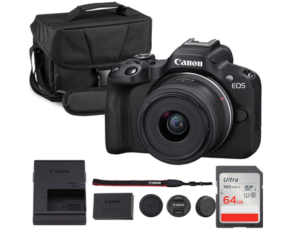
The Canon EOS R50 Mirrorless Camera with 18–45mm Lens (5811C012) Bundle is a beginner-friendly camera designed for people who want to explore photography, record high-quality videos, and create content for social media.
It combines a compact mirrorless design with an interchangeable-lens system and convenient creative tools that make learning photography more approachable. Its included RF-S 18–45mm lens provides a useful focal range for everyday shooting, portraits, street photography, and travel content.
One of the main reasons to consider the Canon EOS R50 is its versatility for different photography activities. The included 18–45mm zoom lens covers wide-angle to standard focal lengths, allowing users to photograph landscapes, city scenes, family occasions, and portraits without frequently changing lenses.
Its compact construction also makes it convenient to carry during trips, outdoor activities, and everyday photography sessions. Beginners can use the camera to practice composition, explore different shooting angles, and develop their understanding of camera settings.
For video creators, the EOS R50 offers oversampled 4K recording, helping produce detailed footage for vlogs, tutorials, travel videos, and social media projects. Its Dual Pixel autofocus technology supports accurate subject tracking and includes face and eye detection.
These functions are particularly useful when recording people, interviews, and self-facing videos because they help keep subjects in focus while moving. This makes the camera appealing to beginners who want to produce videos without constantly adjusting focus manually.
Another useful aspect is its collection of creative features. Canon’s Creative Assist tools provide in-camera guidance that helps beginners experiment with image appearance and shooting adjustments. These features make it easier to understand how different settings affect photographs without immediately needing advanced photography knowledge.
The camera also supports vertical video creation, which is useful for people producing content for platforms that favor portrait-oriented footage. This allows creators to prepare videos in formats suitable for social media sharing.
The Canon EOS R50 is also a practical option for users who want a camera that can grow with their interests. Its interchangeable-lens design allows photographers to explore additional compatible lenses as they gain experience. They can eventually invest in lenses suited to wildlife photography, distant subjects, close-up photography, or specialized portrait work.
The included 18–45mm lens is particularly useful for beginners who want one compact lens for several everyday situations. It provides enough flexibility for casual photography while keeping the camera setup manageable. However, users interested in photographing distant wildlife, sports, or subjects requiring significant magnification may eventually need a longer telephoto lens.
Overall, the Canon EOS R50 is best suited for beginner photographers, students, travel enthusiasts, aspiring vloggers, and social media content creators. Its combination of an approachable design, versatile lens, 4K video capabilities, and intelligent autofocus makes it a suitable entry point for learning photography and developing video production skills.
Specifications
| Feature | Details |
|---|---|
| Camera type | Mirrorless |
| Included lens | RF-S 18–45mm zoom lens |
| Lens coverage | Wide-angle to standard |
| Video recording | Oversampled 4K |
| Autofocus | Dual Pixel CMOS AF |
| Subject detection | Face and eye detection |
| Creative features | Creative Assist |
| Video orientation | Vertical video support |
| Lens system | Interchangeable RF/RF-S lenses |
Pros
• Compact design makes it convenient for travel and everyday photography.
• Versatile 18–45mm lens supports several photography styles.
• Oversampled 4K recording produces detailed video footage.
• Dual Pixel autofocus helps maintain focus on moving subjects.
• Face and eye detection are useful for portraits and vlogging.
• Creative Assist helps beginners experiment with camera settings.
• Vertical video support is convenient for social media content.
• Interchangeable-lens system provides opportunities for future upgrades.
Cons
• Users creating extensive video content may need additional batteries and memory cards.
Advantages of the Best Beginner Mirrorless Cameras
1. Excellent Image Quality
One of the biggest advantages of beginner mirrorless cameras is their ability to produce sharp, detailed photographs with natural-looking colors. Many models feature high-resolution APS-C sensors, such as the 20.9MP and 24.2MP sensors found in the Nikon Z50, Sony a6400, Canon EOS R10, and Canon EOS R50.
These sensors capture sufficient detail for portraits, landscapes, travel photography, wildlife, and everyday moments. Combined with advanced image processors, they help beginners achieve impressive results while learning different photography techniques.
2. Advanced Autofocus and Subject Tracking
Beginner mirrorless cameras offer intelligent autofocus systems that make capturing sharp photographs easier. Features such as Eye Detection AF, face recognition, and subject tracking help maintain focus on people, animals, vehicles, and moving objects.
For example, the Sony a6400 offers Real-Time Eye Autofocus, while the Canon EOS R10 uses Dual Pixel CMOS AF II to track different subjects. These technologies are particularly useful for beginners photographing children, pets, sports, wildlife, and other fast-moving scenes without constantly adjusting focus manually.
3. Versatile Video Recording Capabilities
Another advantage is the ability to record high-quality videos alongside still photographs. Many beginner mirrorless cameras support 4K recording, providing detailed footage for travel videos, tutorials, vlogs, and social media content.
Models such as the Canon EOS R10 and Sony a6400 also offer additional video features that help creators experiment with different recording styles. Some cameras include slow-motion, time-lapse, and vertical video options, allowing beginners to explore content creation without immediately investing in a separate video camera.
4. Compact and Lightweight Designs
Mirrorless cameras are generally convenient to carry, making them suitable for beginners who enjoy photography while traveling or participating in outdoor activities. Their compact bodies are easier to pack than many traditional DSLR setups, while interchangeable lenses provide flexibility for different shooting situations.
Cameras such as the Nikon Z50, Sony a6400, and Canon EOS R50 offer portable designs that work well for street photography, family outings, hiking, and vacations. Their lightweight construction also makes extended photography sessions more comfortable.
5. Interchangeable Lenses and Room for Growth
Beginner mirrorless cameras provide the flexibility to change lenses according to different photography needs. Most entry-level models include versatile standard zoom lenses, such as 16–50mm or 18–45mm options, which are suitable for everyday photography, portraits, and landscapes.
As users gain experience, they can explore additional lenses for wildlife, sports, macro photography, and distant subjects. Compatibility with expanding lens systems, including Canon RF/RF-S, Nikon Z, and Sony E-mount, allows beginners to improve their equipment gradually without replacing their entire camera setup.
Factors to Consider When Choosing the Best Beginner Mirrorless Cameras
1. Sensor Resolution and Image Quality
Sensor resolution is an important consideration when choosing a beginner mirrorless camera because it affects the level of detail captured in photographs. Cameras with higher-resolution sensors generally provide more flexibility when cropping images, enlarging photographs, and editing pictures.
APS-C sensors are particularly suitable for beginners because they offer a good balance between image quality, camera size, and affordability. Look for a camera that produces clear images with natural colors, good dynamic range, and reliable performance in different lighting conditions. This is especially important if you plan to photograph portraits, landscapes, wildlife, or family occasions.
2. Autofocus Performance
A reliable autofocus system makes photography easier, particularly for beginners who are still learning how to control focus manually. Look for mirrorless cameras with features such as face detection, eye detection, and subject tracking.
These technologies help maintain sharp focus on people, animals, vehicles, and moving subjects. The number of autofocus points and their coverage across the sensor can also influence focusing performance. A camera with responsive autofocus is particularly useful for sports, wildlife, street photography, portraits, and capturing spontaneous everyday moments.
3. Lens Compatibility and Versatility
The included lens and the camera’s lens compatibility should be considered before making a purchase. Most beginner mirrorless cameras come with a standard zoom lens that covers wide-angle to standard focal lengths, making it suitable for landscapes, portraits, travel, and everyday photography.
However, you should also consider whether the camera supports additional lenses as your photography skills improve. Having access to telephoto, macro, wide-angle, and portrait lenses gives you more creative possibilities. Choosing a camera with a flexible lens system can help you avoid replacing your entire setup when you begin exploring more specialized photography.
4. Video Recording Capabilities
If you intend to record videos, create vlogs, or produce content for social media, pay attention to the camera’s video specifications. Look for models that support 4K recording, as this provides detailed footage for different creative projects.
Consider the available frame rates, autofocus performance during video recording, and whether the camera supports slow-motion or time-lapse functions. A tilting or fully articulating touchscreen is also useful for recording yourself and experimenting with different shooting angles. Additional features such as microphone connections and vertical video support can be valuable for people interested in developing their content creation skills.
5. Size, Weight, and Ease of Use
A beginner mirrorless camera should be comfortable to carry and straightforward to operate. Compact and lightweight models are convenient for travel, outdoor photography, family activities, and extended shooting sessions.
Consider the camera’s grip, button placement, touchscreen controls, and electronic viewfinder when comparing different options. An intuitive menu system and accessible automatic shooting modes can make learning photography less complicated. It is also beneficial to choose a camera that provides manual controls, allowing you to experiment with shutter speed, aperture, and ISO as your understanding of photography improves.
6. Battery Life, Connectivity, and Accessories
Battery performance and connectivity are practical considerations that can influence your overall photography experience. Look for a camera with sufficient battery capacity for your typical shooting activities, especially if you plan to record videos or spend long periods outdoors.
Wi-Fi and Bluetooth connectivity make transferring photographs to smartphones and other compatible devices more convenient. You should also consider the availability of useful accessories such as memory cards, spare batteries, camera bags, tripods, and protective filters. Purchasing a bundle that includes some of these essentials can help reduce additional expenses and provide a convenient starting point for beginner photography.
Best Beginner Mirrorless Cameras FAQs
1. What should beginners look for when buying a mirrorless camera?
Beginners should consider image quality, autofocus performance, ease of use, lens compatibility, and video recording capabilities when choosing a mirrorless camera. A model with a high-resolution APS-C sensor, reliable eye detection, and a versatile kit lens is a good starting point. Other useful features include 4K video recording, a tilting touchscreen, Wi-Fi, and Bluetooth connectivity. It is also important to consider camera size, battery life, and available accessories.
2. Are mirrorless cameras better than DSLR cameras for beginners?
Mirrorless cameras can be an excellent choice for beginners because they typically offer compact designs, electronic viewfinders, responsive autofocus, and convenient video features. Many models also include touchscreen controls and automatic shooting modes that make learning photography easier. DSLRs remain useful options, but mirrorless cameras offer modern features and access to expanding interchangeable-lens systems, making them appealing to new photographers.
3. Can I use a beginner mirrorless camera for professional photography and video recording?
Yes. Beginner mirrorless cameras can produce high-quality photographs and videos suitable for many professional and creative projects. Their interchangeable-lens systems, advanced autofocus technologies, and 4K recording capabilities provide plenty of opportunities to develop photography and videography skills. With suitable lenses, lighting, and other accessories, beginners can gradually use these cameras for paid portraits, events, travel content, product photography, and social media production.