A successful hunting trip starts with knowing your distance, and the Best Laser Rangefinder for Hunting can help you measure targets accurately and make more informed decisions in the field.
When choosing a reliable hunting rangefinder, I look for essential features such as long-range measurement, excellent optical clarity, angle compensation for uphill and downhill shots, fast target acquisition, and a clear display for changing lighting conditions.
I also consider battery life, weather resistance, durability, and specialized functions such as ballistic calculations and scan modes to find options suitable for different hunting styles. In this guide, I’ll explore the top laser rangefinders for hunting, highlight their key features, and explain what makes each option worth considering. I’ll also share the important factors to consider before buying, discuss the advantages of using a hunting rangefinder, and answer frequently asked questions to help you choose the best laser rangefinder for your needs, budget, and outdoor adventures.
Best Laser Rangefinder for Hunting
(1)OTX/HTX-1600 1760-Yard Laser
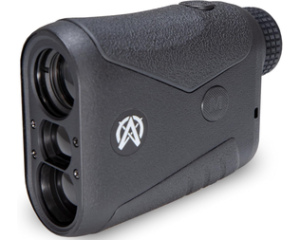
The OTX/HTX-1600 1760-Yard Laser Rangefinder is designed for hunters and shooting enthusiasts who need reliable distance measurements in the field. It can measure reflective targets up to 1,760 yards, buildings up to 1,500 yards, trees up to 1,000 yards, and deer up to 800 yards. With an accuracy of approximately ±1 yard, it helps hunters estimate distances more precisely when assessing targets and planning their shots.
This rangefinder features a red OLED display with five brightness settings, allowing users to adjust screen visibility according to the surrounding light. Three selectable reticle options provide flexibility when acquiring targets. These features are useful during early morning or late evening hunts when lighting conditions can make distance readings more difficult to see. The adjustable display also helps accommodate different environments throughout the day.
The OTX/HTX-1600 offers several ranging modes for different outdoor activities. Its Horizontal or Angle-Corrected Mode accounts for changes in elevation, helping bowhunters and rifle hunters estimate horizontal distance when shooting uphill or downhill. Line-of-Sight Angle Mode provides direct distance and angle information, while dedicated Archery and Gun modes offer additional flexibility. The Golf Mode includes Pin Lock, and Scan Mode allows continuous measurements across multiple targets.
Equipped with a 6×21 all-glass optical system, this rangefinder provides six-times magnification for viewing distant objects. Fully multi-coated lenses help improve image clarity, while rain-protective coatings help maintain visibility in damp conditions. The optical system has a stated light transmission rate of 70.9%, supporting useful viewing performance in varying light. Its measurement speed of approximately 0.10 seconds also allows users to obtain readings quickly without spending too much time adjusting their position.
Built for outdoor use, the OTX/HTX-1600 features an IPX4 water-resistant design, nitrogen-filled construction, and a rubber-armored body intended to withstand everyday outdoor handling. Its shock-resistant construction adds reassurance when carrying the device across uneven terrain. The package includes a premium carry case, microfiber lens-cleaning cloth, adjustable neck lanyard, CR2 battery, decal sticker, and quick-start guide.
The manufacturer also provides a lifetime, fully transferable warranty covering repair or replacement for damaged or defective products. Loss, theft, deliberate damage, and cosmetic damage that does not affect performance are excluded.
The OTX/HTX-1600 is suitable for hunters who need long-distance measurements, angle compensation, and a readable display in changing light. Rifle hunters can benefit from its extended ranging capability, while bowhunters may appreciate its angle-corrected mode. It can also serve outdoor enthusiasts who want one device for hunting, shooting, and occasional golfing.
Specifications
- Maximum range: 1,760 yards for reflective targets
- Deer ranging distance: Up to 800 yards
- Accuracy: Approximately ±1 yard
- Magnification: 6x
- Objective lens: 21 mm
- Display: Red OLED with five brightness settings
- Ranging modes: Angle-corrected, line-of-sight, archery, gun, golf, and scan
- Weather resistance: IPX4 water-resistant
- Battery: CR2
Pros
• Extended ranging capability for distant targets
• Fast measurements in approximately 0.10 seconds
• Angle compensation supports uphill and downhill distance estimation
• Adjustable red OLED display with multiple reticle options
• Fully multi-coated optics with rain-protective coatings
• Rubber-armored construction for outdoor handling
• Lifetime, transferable warranty with repair or replacement coverage
Cons
• The stated maximum range for deer is 800 yards, considerably less than the maximum reflective-target range.
(2)Yard Sync L10 Golf
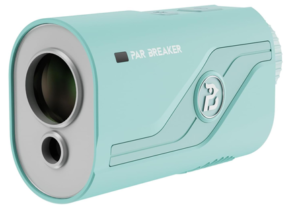
The Best Laser Rangefinder for Hunting Yard Sync L10 Golf Laser Rangefinder is designed for golfers who want quick, accurate distance measurements to improve their course strategy. It can lock onto golf flags up to 400 yards away and measure reflective targets at distances of up to 1,300 yards.
With an advertised accuracy of ±1 yard, it helps golfers determine distances before selecting a club. Its vibration feedback confirms when the device locks onto the flag, reducing uncertainty when trees or other objects appear behind the target.
One useful feature of the Yard Sync L10 is its slope compensation function, which calculates elevation-adjusted distances to help golfers choose suitable clubs when playing uphill or downhill shots. This can be particularly helpful during practice rounds, where understanding elevation changes can improve course management.
The external slope switch allows users to disable this function for competitions where slope-enabled rangefinders are not permitted. Golfers should still check the rules of their specific tournament before using the device.
Instead of relying on replaceable CR2 batteries, the Yard Sync L10 features a built-in rechargeable battery. According to the manufacturer, a full charge supports more than 50 rounds or approximately 3,000 measurements, depending on usage conditions. USB-C charging makes it convenient to recharge the device overnight before heading to the golf course.
This design can also help reduce the inconvenience and ongoing expense of purchasing replacement batteries.
Weighing approximately 4.9 ounces and measuring 3.75 × 1.4 × 2.4 inches, the Yard Sync L10 is compact enough to carry comfortably in a pocket or golf bag. Its integrated magnetic mount allows it to attach to a compatible golf cart, keeping the rangefinder accessible between shots. This practical design helps golfers retrieve the device quickly without having to search through their equipment.
The rangefinder features 6x magnification and multi-coated optics to provide clear views of distant targets. Its Class 1 eye-safe laser is designed for distance measurement, while continuous scan mode updates readings as users move across different targets. The water-resistant construction provides additional protection against splashes and changing weather conditions on the course.
The Yard Sync L10 is best suited to recreational golfers, regular players, and competitive golfers who want convenient distance measurements and slope-adjusted yardages during practice. Its vibration-assisted flag locking, rechargeable battery, and magnetic cart attachment are particularly useful for players who value speed and ease of use. The ability to disable slope also makes it adaptable to tournament settings where permitted.
Specifications
- Maximum reflective-target range: 1,300 yards
- Flag-locking range: Up to 400 yards
- Accuracy: ±1 yard
- Magnification: 6x
- Dimensions: 3.75 × 1.4 × 2.4 inches
- Weight: 4.9 ounces
- Battery: Built-in rechargeable battery
- Charging: USB-C
- Additional features: Slope on/off, vibration confirmation, continuous scan, magnetic mount, and water-resistant construction
Pros
• Fast flag acquisition with vibration confirmation
• Slope compensation supports elevation-aware club selection
• External switch disables slope for eligible tournament play
• Rechargeable battery eliminates the need for replacement CR2 batteries
• Lightweight construction makes it easy to carry
• Magnetic mount provides convenient access on a compatible golf cart
• Continuous scanning helps users measure multiple targets
Cons
• The flag-locking range of 400 yards is considerably shorter than the maximum reflective-target range.
(3)Callaway 300 Pro Golf Laser
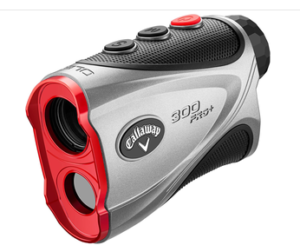
The Best Laser Rangefinder for Hunting Callaway 300 Pro Golf Laser Rangefinder is designed for golfers who want clear distance readings and convenient target identification on the course. Its two-color OLED display presents yardages and icons in a format intended to be easy to read under different lighting conditions.
This can be helpful when playing in bright sunshine or when shadows make it harder to distinguish distant targets. The display helps golfers access distance information quickly before choosing a club.
Accurately identifying the flag can be challenging when trees, bunkers, or other objects sit behind the green. The Callaway 300 Pro addresses this with Pulse Pin-Lock technology, which provides a short vibration when the rangefinder locks onto the flag.
This feedback reassures golfers that they have targeted the intended object rather than the background. By making flag acquisition more convenient, the feature helps players obtain useful distance information for their next shot.
The rangefinder includes slope compensation to calculate adjusted distances for uphill and downhill shots. Since elevation changes can influence club selection, these readings can help golfers plan their approach more effectively during practice rounds.
An external LED indicator shows whether slope mode is enabled, making it easier to check the device’s status. The external slope control also allows users to disable the feature when required for competition. Golfers should confirm that their specific tournament permits the device’s use.
The Callaway 300 Pro uses a built-in rechargeable battery instead of disposable batteries. According to the supplied product information, it can support more than 30 rounds on a charge under typical usage conditions. USB-C charging provides a convenient way to replenish the battery before a game, reducing the need to carry replacement batteries. Actual battery life may vary depending on how frequently the rangefinder is used and the conditions in which it operates.
With a stated measurement range of 5 to 1,200 yards and magnification of up to 7x, this rangefinder helps golfers locate and measure distant targets. Its integrated magnet allows it to attach to compatible metal golf cart frames, keeping it accessible between shots. This arrangement can make it easier to retrieve the device without repeatedly reaching into a pocket or golf bag.
The Callaway 300 Pro is suitable for recreational golfers, regular course players, and experienced golfers seeking convenient distance measurements. Its vibration-assisted flag locking is useful when the background contains distracting objects, while slope compensation can assist with elevation changes during practice. The rechargeable battery and magnetic mount also appeal to golfers who value convenience throughout a round.
Although this model is marketed for golf rather than hunting, its distance-measuring capabilities may interest readers comparing laser rangefinders. However, golfers should not assume that it offers hunting-specific functions such as dedicated archery modes or ballistic calculations.
Specifications
- Measurement range: 5–1,200 yards
- Magnification: Up to 7x
- Display: Two-color OLED
- Flag-locking technology: Pulse Pin-Lock with vibration
- Slope function: Uphill and downhill distance compensation
- Slope indicator: External LED
- Battery: Built-in rechargeable battery
- Charging: USB-C
- Additional feature: Integrated magnetic mount
Pros
• High-resolution OLED display for readable distance information
• Vibration feedback confirms flag acquisition
• Slope compensation helps with elevation-adjusted distances
• External LED indicates whether slope mode is active
• Rechargeable battery reduces reliance on disposable batteries
• Magnetic mount keeps the device accessible on compatible golf carts
• Up to 7x magnification supports distant target viewing
Cons
• Built-in battery cannot be replaced as quickly as a removable battery in the field
(4)Hunting Range Finder 1400 Yards 6X Angle Height
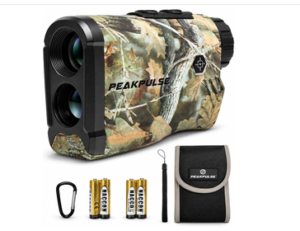
The Hunting Range Finder 1400Yds 6X Angle Height is designed for hunters who need reliable distance information when navigating different types of terrain. Its advertised maximum range of 1,400 yards makes it suitable for measuring distances to distant landscape features and potential targets, although the effective range depends on the target’s size, reflectivity, and environmental conditions.
Its angle compensation function calculates horizontal distance for shots taken from elevated positions, such as tree stands, or across steep slopes. This helps hunters make more informed distance estimates without relying entirely on mental calculations.
This rangefinder offers three operating modes to support different outdoor activities. Basic distance mode measures the distance to a target, while horizontal distance mode provides angle-adjusted measurements for hunters shooting from elevated positions.
The vertical height mode helps users estimate the height of landscape features, including ridge lines. A simple button-operated mode selection system allows hunters to switch between these functions without navigating complicated controls. These options make the device useful for scouting and preparing for hunting trips.
The rangefinder features 6x magnification, helping hunters view distant objects more clearly while measuring their distance. Its optical system is designed to provide useful image brightness during early mornings and late evenings, when many hunters are active.
Vibration feedback confirms when a target has been acquired, allowing users to recognize a successful measurement without relying exclusively on the display. However, actual visibility in low light depends on the surrounding conditions and the target being viewed.
Measuring approximately 4.7 inches in length, the rangefinder has a compact design intended for convenient carrying during extended hunting trips. Its camouflage exterior suits outdoor environments and helps it blend into natural surroundings.
The lightweight construction makes it easier to carry alongside other hunting equipment when walking through forests, grasslands, or uneven terrain. Its straightforward controls are also helpful for hunters who prefer a device that can be operated quickly in the field.
Unlike rechargeable models, this rangefinder operates on two AAA batteries. The package includes four AAA batteries, providing two sets for additional convenience. According to the supplied information, each set can support more than 5,000 measurements, although actual battery life varies with usage and conditions.
The included carrying case, lanyard, and user manual help users transport and operate the device. It also uses a Class 1 laser rated at 905 nm and less than 1 mW, with a one-year warranty and customer support.
This rangefinder is particularly suitable for deer hunters, bowhunters, and outdoor enthusiasts who frequently navigate hilly terrain or hunt from elevated tree stands. Its horizontal distance calculations can assist with evaluating uphill and downhill shots, while the height mode is useful for scouting.
It is also a practical option for hunters who prefer replaceable batteries instead of charging equipment during backcountry trips.
Specifications
- Advertised maximum range: 1,400 yards
- Magnification: 6x
- Ranging modes: Basic distance, horizontal distance, and vertical height
- Angle compensation: Yes
- Target confirmation: Vibration feedback
- Length: Approximately 4.7 inches
- Battery type: AAA, two required
- Laser classification: Class 1, 905 nm, less than 1 mW
- Warranty: One year
Pros
• Long advertised ranging distance for outdoor use
• Angle compensation helps estimate horizontal distance on sloping terrain
• Three modes support hunting and scouting activities
• 6x magnification assists with viewing distant targets
• Vibration feedback confirms target acquisition
• Compact camouflage body is convenient for field use
• Includes four AAA batteries and a carrying case
Cons
• The advertised maximum range may not be achievable with every target or in all weather conditions.
(5)Gogogo Sport Vpro 900-Yard Laser Rangefinder
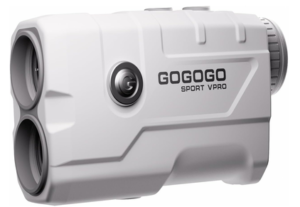
The Best Laser Rangefinder for Hunting Gogogo Sport Vpro Golf Rangefinder is a versatile distance-measuring device designed primarily for golfers but also marketed for hunting applications. With a maximum advertised range of 900 yards and an accuracy of approximately ±1 yard, it provides distance readings to help users assess targets and make informed decisions.
Its measurement speed of around 0.5 seconds allows users to obtain readings quickly, reducing delays when checking distances on the golf course or in the field. Users can also switch between yards and meters to suit their preferences.
Equipped with 6x magnification, the Gogogo Sport Vpro makes distant objects easier to view when identifying targets. Its high-definition LCD display presents distance information for convenient reading. These features are useful for golfers measuring distances to flags and other course features.
Hunters may also find the magnification helpful when observing distant landscape features, although actual viewing clarity depends on lighting, weather, and target conditions. The device uses a Class 1 laser, which is designed to meet the relevant eye-safety classification requirements when used as directed.
The rangefinder includes slope compensation to provide elevation-adjusted distances for uphill and downhill shots. When slope mode is enabled, users can access angle information, line-of-sight distance, and golf compensation distance. Its pin-locking technology helps identify the flag among surrounding objects, while vibration feedback confirms successful target acquisition. An accessible slope switch allows users to disable slope measurements when necessary. This can be useful for tournament golfers, although compliance depends on the competition’s specific equipment rules.
The Gogogo Sport Vpro features a built-in 750mAh rechargeable battery with USB-C charging. According to the manufacturer, a full charge can support up to 20,000 measurements, although actual performance may vary depending on usage and operating conditions.
Its magnetic strip allows the rangefinder to attach to a compatible metal golf cart surface, keeping it accessible between shots. This combination of rechargeable power and magnetic attachment makes the device convenient for golfers who prefer not to carry spare disposable batteries.
The rangefinder includes a soft carrying case, hand strap, lens-cleaning cloth, USB-C charging cable, and user manual. These accessories help users transport, maintain, and operate the device. The manufacturer also provides a one-year free repair service and access to customer support.
Although the rangefinder offers features that may interest hunters, its golf-oriented design means buyers should confirm that its ranging capabilities suit their specific hunting requirements.
The Gogogo Sport Vpro is best suited to recreational golfers and regular players who want quick distance readings, slope compensation, and convenient flag locking. It may also appeal to hunters who need a compact device for general distance estimation, provided its specifications meet their requirements. However, hunters seeking specialized ballistic calculations or dedicated hunting modes may prefer a purpose-built hunting rangefinder.
Specifications
- Maximum advertised range: 900 yards
- Accuracy: ±1 yard
- Magnification: 6x
- Display: HD LCD
- Measurement speed: Approximately 0.5 seconds
- Battery: Built-in 750mAh rechargeable battery
- Charging: USB-C
- Additional features: Slope compensation, pin lock, vibration feedback, magnetic attachment
- Warranty: One-year free repair service
Pros
• Advertised range of up to 900 yards
• Approximately ±1-yard measurement accuracy
• Slope compensation assists with elevation-adjusted distance estimates
• Vibration feedback confirms flag locking
• Rechargeable battery eliminates the need for disposable batteries
• Magnetic attachment provides convenient access on compatible golf carts
• Includes a carrying case and useful accessories
Cons
• The maximum advertised range may vary with target characteristics and environmental conditions.
(6)Leupold RX-FullDraw 5 Rangefinder
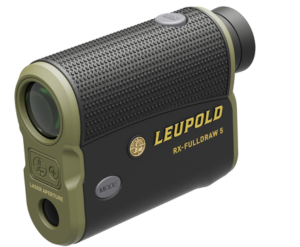
The Leupold RX-FullDraw 5 Rangefinder is designed specifically for bowhunters who need precise distance information when preparing for challenging shots. Its Archer’s Advantage technology uses information about arrow weight, arrow velocity, and peep height to calculate customized distance recommendations.
By accounting for these bow-specific factors, the rangefinder helps archers evaluate shots across varying terrain, including steep angles and longer distances. This makes it particularly useful for hunters who want distance estimates tailored to their individual archery equipment rather than relying solely on basic line-of-sight measurements.
Another important feature is Flightpath technology, which uses the selected bow’s ballistic information to display the highest point of the arrow’s flight. Understanding this trajectory can help bowhunters assess whether branches, tall grass, or other obstacles could interfere with an arrow’s path.
This additional information is valuable when hunting in wooded areas or locations with uneven vegetation. By considering the arrow’s flight path before releasing a shot, archers can make more informed decisions about potential obstructions and shooting opportunities.
The RX-FullDraw 5 features a selectable OLED display with bright red characters and adjustable brightness settings. This allows users to adapt the display to different lighting conditions, including early mornings and late evenings when many hunting activities take place.
The clear numerical presentation helps archers read distance information without unnecessary delays. Adjustable brightness is particularly useful when hunters need to balance screen visibility with their ability to observe the surrounding environment.
When ranging through vegetation, a laser can encounter several objects before reaching the intended target. Leupold’s Last Target mode is designed to prioritize the farthest target detected along the laser’s path. This can help reduce interference from nearby grass, twigs, and similar obstructions when measuring distances to more distant objects.
For bowhunters operating in brushy or wooded environments, this function can make distance measurement more convenient. However, users should still confirm that the displayed reading corresponds to their intended target.
Unlike general-purpose golf rangefinders, the RX-FullDraw 5 focuses on the requirements of archery hunting. Its ballistic customization, trajectory information, and target-selection functionality provide tools specifically relevant to bowhunters.
To benefit from the ballistic calculations, users need to enter accurate information about their bow and arrow setup. The quality of the resulting estimates depends on the accuracy of these inputs and the conditions of the shot.
The Leupold RX-FullDraw 5 is best suited to bowhunters who want more detailed distance information for shots involving elevation changes or obstacles. Experienced archers may particularly appreciate its customized ballistic calculations and arrow trajectory display. It can also benefit hunters who regularly operate in wooded environments where vegetation complicates target ranging.
Specifications
- Model number: 182444
- Product type: Archery hunting laser rangefinder
- Ballistic technology: Archer’s Advantage
- Trajectory feature: Flightpath technology
- Display: Selectable OLED
- Display color: Red characters
- Brightness: Adjustable
- Target selection: Last Target mode
Pros
• Bow-specific ballistic calculations using arrow weight, velocity, and peep height
• Flightpath technology helps evaluate potential arrow obstructions
• Adjustable OLED display supports different lighting conditions
• Last Target mode helps reduce interference from nearby vegetation
• Designed specifically for bowhunting requirements
• Useful for evaluating steep-angle and longer-distance shots
Cons
• Requires accurate bow and arrow information for useful ballistic calculations.
Read Also: Best Golf Rangefinder
Advantages of the Best Laser Rangefinder for Hunting
1. Accurate Distance Measurement
One of the main advantages of the best laser rangefinder for hunting is its ability to measure the distance between a hunter and a target quickly and accurately. Models such as the OTX/HTX-1600 and the Gogogo Sport Vpro offer long-range measurement capabilities, helping hunters assess distances before making shooting decisions.
Depending on the model and target conditions, some rangefinders can measure reflective objects at distances exceeding 1,000 yards. Accurate distance information helps hunters understand their surroundings, judge the distance to potential targets, and make better-informed decisions in the field.
2. Angle Compensation for Uphill and Downhill Shots
Hunting often involves uneven terrain, elevated tree stands, and steep hillsides that can complicate distance estimation. Rangefinders with angle compensation calculate horizontal distance or provide adjusted readings to help hunters account for elevation differences.
This feature is particularly valuable for bowhunters using models such as the Leupold RX-FullDraw 5, which incorporates specialized bow-ballistics technology. By understanding the relationship between slope and distance, hunters can make more informed shooting decisions when navigating challenging landscapes. The appropriate aiming solution still depends on the hunter’s equipment, training, and conditions.
3. Improved Target Identification in Different Lighting Conditions
The best laser rangefinders for hunting often include optical magnification and displays designed to make distance readings easier to see. For example, the OTX/HTX-1600 features a red OLED display with adjustable brightness, while the Leupold RX-FullDraw 5 offers a selectable OLED display for changing light conditions.
These features can help hunters read measurements during early mornings, late evenings, and other periods when lighting is less favorable. Magnification also assists with viewing distant objects, although a rangefinder should not be treated as a substitute for appropriate binoculars or safe target identification practices.
4. Faster Measurements and Greater Convenience
Another advantage is the speed and convenience these devices provide during hunting trips. Many modern rangefinders deliver measurements in less than a second, reducing the time spent estimating distances manually.
Features such as vibration feedback, one-button controls, and multiple ranging modes make operation more straightforward. For instance, the Hunting Range Finder 1400Yds offers basic distance, horizontal distance, and vertical height modes, while the OTX/HTX-1600 provides a scan mode for measuring multiple targets. These functions help hunters assess terrain efficiently while keeping their equipment accessible and ready for use.
5. Durable Construction for Outdoor Conditions
Hunting rangefinders are designed to accompany users through forests, grasslands, hills, and other demanding outdoor environments. Depending on the model, useful construction features may include water resistance, rubberized armor, shock resistance, and compact dimensions.
The OTX/HTX-1600, for example, has an IPX4 water-resistant body and rubber armor, while compact models are easier to carry during extended trips. Battery options also contribute to convenience, with some devices using replaceable batteries and others featuring rechargeable power. Choosing a rangefinder with suitable protection, dependable battery performance, and a comfortable design can help hunters use it more confidently in the field.
Factors to Consider When Choosing the Best Laser Rangefinder for Hunting
1. Maximum Range and Measurement Accuracy
The maximum ranging distance is one of the most important factors to consider when choosing a laser rangefinder for hunting. Select a model that can measure distances appropriate for your hunting environment, whether you typically hunt in dense forests, open grasslands, or mountainous terrain.
However, remember that the maximum advertised range often applies to reflective targets rather than animals. Trees, buildings, and deer may produce different ranging results depending on their size, surface characteristics, and surrounding conditions. Measurement accuracy is equally important because reliable distance readings help hunters assess their surroundings and make informed decisions. Consider both the advertised maximum range and the effective range for targets similar to those you expect to encounter.
2. Angle Compensation and Hunting Modes
Hunting frequently involves uneven terrain, elevated tree stands, and uphill or downhill shooting positions. A rangefinder with angle compensation can calculate horizontal distance or provide adjusted readings that account for changes in elevation. This is particularly useful for bowhunters, who may need to consider how an elevated shooting position affects distance estimation.
Some models also offer specialized modes for archery, rifle hunting, scanning, or measuring vertical height. Before purchasing, consider the type of hunting you practice and choose a device with functions that support your specific needs. Straightforward controls are also beneficial because they allow you to switch modes without navigating complicated menus.
3. Optical Quality and Display Visibility
Optical quality determines how clearly you can view distant objects through a rangefinder. Consider the magnification level, objective lens size, and lens coatings when comparing available options. Magnification of around 6x is common in handheld rangefinders and can help users observe distant targets without carrying a separate optical device for every task.
Display visibility is equally important, especially during early mornings and late evenings when hunting activity may be more frequent. Some rangefinders feature red OLED displays with adjustable brightness, while others use LCD screens. Choose a display that provides readable measurements in the lighting conditions you regularly encounter without making the screen uncomfortable to view.
4. Durability and Weather Resistance
A hunting rangefinder should withstand the environmental conditions associated with your outdoor activities. Rain, moisture, dust, accidental impacts, and rough handling can affect the performance and lifespan of sensitive electronic equipment.
Look for models with appropriate water resistance, a durable housing, and rubberized armor that improves grip and helps protect the device against minor knocks. Compact, lightweight construction is also beneficial when you need to carry equipment over long distances. Check the manufacturer’s stated protection rating rather than assuming that a weather-resistant device can withstand immersion in water. A secure carrying case and neck lanyard can provide additional convenience and protection during hunting trips.
5. Battery Life and Power Options
Battery performance is another important consideration, particularly when hunting in remote locations where charging facilities may be unavailable. Some rangefinders use replaceable batteries, such as AAA or CR2 cells, while others feature built-in rechargeable batteries with USB charging. Replaceable batteries allow you to carry spares and restore power quickly in the field.
Rechargeable models can reduce the need to purchase disposable batteries and may offer many measurements per charge. When comparing devices, consider the expected battery life, charging requirements, availability of replacement batteries, and number of measurements supported. Choose a power system that suits the duration of your hunting trips and the facilities available to you.
6. Ease of Use, Additional Features, and Warranty
A good hunting rangefinder should be comfortable to operate and provide features that genuinely improve your experience. Consider the button layout, speed of measurement, target-lock confirmation, and availability of scan mode. Vibration feedback can confirm when a target has been acquired, while scan mode allows you to measure multiple objects without repeatedly restarting the process.
Specialized bowhunting features, such as ballistic calculations and arrow trajectory information, may also be valuable to archers. Finally, review the warranty terms and customer support offered by the manufacturer. Pay attention to coverage duration, repair or replacement conditions, and exclusions for loss, theft, or accidental damage. Choosing a dependable, easy-to-use device with appropriate features and clear warranty protection can provide better long-term value.
3 Best Laser Rangefinder for Hunting FAQs
1. What is the best laser rangefinder for hunting?
The best laser rangefinder for hunting depends on your hunting style, terrain, and distance requirements. Bowhunters may benefit from models with angle compensation, ballistic calculations, and arrow trajectory information, while rifle hunters may prioritize long-range measurement and accuracy.
Other useful features include clear displays, fast target acquisition, durable construction, and reliable battery performance. Consider your specific needs before choosing a rangefinder that offers the right combination of features.
2. How far can a laser rangefinder measure when hunting?
The measuring distance varies by model and target conditions. Some hunting rangefinders advertise maximum ranges exceeding 1,000 yards for reflective targets, but their effective range on animals is usually shorter. Factors such as target size, surface reflectivity, weather, vegetation, and lighting can affect measurement performance. When selecting a rangefinder, check its stated range for animal-sized targets rather than relying exclusively on the maximum advertised distance.
3. Why is angle compensation important in a hunting rangefinder?
Angle compensation helps hunters account for elevation differences when measuring distances on uphill or downhill terrain. This feature is particularly useful when hunting from elevated tree stands or across steep hillsides. By providing a horizontal or angle-adjusted distance, the rangefinder helps users make more informed shooting calculations. It can be especially beneficial for bowhunters, although accurate shot placement still depends on proper equipment setup, practice, and an understanding of the conditions.
Final Verdict
Choosing the best laser rangefinder for hunting can make outdoor adventures more efficient by providing accurate distance measurements, fast target acquisition, and useful features for navigating challenging terrain. The models discussed offer different advantages, including long-range measurement, angle compensation, clear displays for changing light conditions, and durable designs suited to outdoor use.
Some are particularly useful for bowhunters who need specialized ballistic calculations, while others provide versatile ranging modes for general hunting and scouting. When selecting a rangefinder, I recommend considering its effective range on animal-sized targets, measurement accuracy, optical quality, battery life, weather resistance, and ease of use. By matching these features to your hunting style and environment, you can choose a reliable rangefinder that supports better distance estimation, more informed decisions, and a more rewarding hunting experience.