
Best Beginner DSLR Camera with Wifi can make your photography journey more enjoyable by combining excellent image quality, user-friendly controls, and convenient wireless connectivity.
In this guide, I will explore Best Beginner DSLR Camera with Wifi that offer essential features such as high-resolution sensors, reliable autofocus systems, built-in Wi-Fi, interchangeable lenses, and Full HD or 4K video recording.
I will also consider factors such as battery life, ease of use, shooting speed, lens compatibility, and overall value to help you find a camera that suits your needs and budget. Whether you want to photograph family moments, explore travel photography, capture wildlife, or create content for social media, I will highlight the top picks and explain what makes each option worth considering.
Additionally, I will provide a practical buying guide, discuss the main advantages of Best Beginner DSLR Camera with Wifi , and answer frequently asked questions to help you make an informed decision. By the end, you will have a clearer understanding of which camera offers the right balance of performance, convenience, and room to grow as a photographe
6 Best Beginner DSLR Camera with Wifi
(1)Canon EOS Rebel T7 DSLR Camera
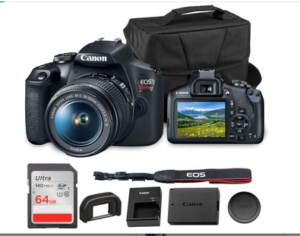
The Canon EOS Rebel T7 DSLR Camera with 18–55mm Lens Bundle is a practical choice for beginners looking for a DSLR camera with Wi-Fi connectivity, dependable image quality, and room to develop their photography skills. It combines a 24.1-megapixel APS-C CMOS sensor with the DIGIC 4+ image processor to capture detailed photographs with natural-looking colors. This combination also helps control image noise, making the camera suitable for everyday photography and scenes with less-than-ideal lighting.
The Rebel T7 features built-in Wi-Fi and NFC, allowing users to transfer images to compatible smartphones, tablets, and other devices without relying entirely on cables. Through Canon’s Camera Connect app, photographers can also use a compatible smartphone for remote shooting and live viewing.
These functions are particularly convenient for sharing travel photographs, posting family pictures on social media, or taking group photos without standing behind the camera.
Another useful feature is its compatibility with Canon EF and EF-S lenses. The included 18–55mm lens provides a versatile starting point for photographing landscapes, portraits, family gatherings, and everyday subjects. As your skills improve, you can explore additional lenses for wide-angle photography, close-up images, or distant subjects.
The camera’s user-friendly design makes learning DSLR photography less intimidating. It includes a bright optical viewfinder, a 3.0-inch LCD screen, and an accessible menu system. Automatic shooting modes help beginners get started, while the camera’s adjustable settings allow them to experiment with exposure and other photographic techniques as they gain experience.
The Canon EOS Rebel T7 Best Beginner DSLR Camera with Wifi , students, families, travel enthusiasts, and hobbyists who want more creative control than a basic smartphone camera offers. Its wireless connectivity is particularly helpful for people who regularly share their photographs. The interchangeable-lens system also makes it a reasonable option for anyone planning to develop their photography skills over time.
The bundle includes a rechargeable battery, charger, eyecup, body cap, neck strap, shoulder bag, and 64GB memory card, providing several useful accessories for getting started.
Specifications
• Sensor: 24.1MP APS-C CMOS
• Image processor: DIGIC 4+
• Lens included: Canon 18–55mm
• Connectivity: Built-in Wi-Fi and NFC
• Display: 3.0-inch LCD
• Viewfinder: Optical
• Lens compatibility: Canon EF and EF-S
• Battery: Canon LP-E10, 860mAh
• Memory card: 64GB included
Pros
• Detailed photographs: The 24.1MP sensor captures plenty of detail for everyday photography, portraits, and landscapes.
• Convenient wireless sharing: Wi-Fi and NFC simplify transferring images to compatible devices.
• Beginner-friendly operation: Automatic modes and an accessible menu help newcomers learn the basics.
• Room to grow: Compatibility with EF and EF-S lenses offers opportunities to explore different photographic styles.
• Useful starter bundle: The included lens, memory card, battery, charger, and shoulder bag provide essential accessories.
• Smartphone control: The Camera Connect app supports remote shooting and live viewing with compatible devices.
Cons
• Basic image processor: The DIGIC 4+ processor is an older generation compared with those in newer DSLR models.
(2)Canon EOS R100: Best Beginner DSLR Camera with Wi-Fi
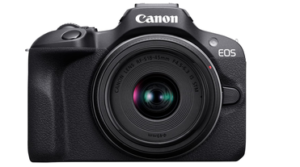
The Canon EOS R100 is an entry-level interchangeable-lens mirrorless camera designed for beginners who want to explore photography and video recording. Although it is often considered alongside beginner DSLR cameras, the R100 belongs to Canon’s EOS R mirrorless series.
It features a 24.1-megapixel APS-C CMOS sensor that captures detailed images with natural colors and attractive background blur. This makes it suitable for portraits, travel photography, family occasions, and everyday creative projects.
The camera uses Canon’s DIGIC 8 image processor to support responsive operation, improved shooting functionality, and 4K video recording. Its compact, lightweight design makes it convenient for carrying on trips, outdoor adventures, and daily outings. For beginners who want an interchangeable-lens camera without carrying bulky equipment, the R100 offers a portable starting point for developing photography skills.
Autofocus is another important part of its design. Dual Pixel CMOS AF covers a broad area of the frame, with coverage available across up to 143 zones, depending on the lens and settings.
Human face and eye detection help keep portraits in focus, while animal and vehicle detection can assist with photographing moving subjects. The camera can also capture up to 6.5 frames per second in One-Shot AF mode, making it useful for occasional action photography and candid moments.
For video creators, the EOS R100 supports several recording options. It can record 4K video at up to 24 frames per second, Full HD video at up to 60 frames per second, and HD video at up to 120 frames per second. These options provide flexibility for recording travel clips, family videos, and social media content. However, the available recording modes and autofocus performance vary depending on the selected settings.
As an interchangeable-lens camera, the R100 allows users to expand their creative options by choosing compatible Canon RF and RF-S lenses. This flexibility makes it possible to explore different photography styles as experience grows.
The Canon EOS R100 is the Best Beginner DSLR Camera with Wifi , students, travel enthusiasts, and aspiring content creators who want a lightweight camera for still images and video. It is particularly suitable for people learning composition, portrait photography, and autofocus techniques. Its interchangeable-lens design also makes it useful for hobbyists who want to progress beyond basic point-and-shoot photography.
Specifications
• Camera type: Mirrorless
• Sensor: 24.1MP APS-C CMOS
• Image processor: DIGIC 8
• Video resolution: Up to 4K at 24 fps
• Autofocus: Dual Pixel CMOS AF
• Continuous shooting: Up to 6.5 fps in One-Shot AF
• HD video: Up to 120 fps
• Lens mount: Canon RF
• Design: Compact and lightweight
Pros
• Detailed image quality: The 24.1MP sensor captures sharp photographs with pleasing background blur.
• Portable construction: Its compact body is convenient for travel and everyday use.
• Versatile video recording: Multiple frame-rate options support different creative projects.
• Useful autofocus features: Face, eye, animal, and vehicle detection assist with focusing on subjects.
• Interchangeable lenses: Compatible lenses provide flexibility as photographic interests develop.
Cons
• Entry-level design: Advanced photographers may want more extensive controls and features.
(3)Canon DSLR Camera EOS 90DBest Beginner DSLR Camera with Wifi
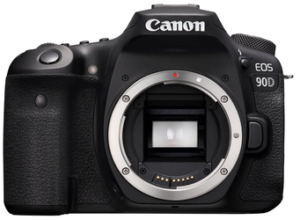
The Canon EOS 90D DSLR Camera is a versatile option for beginners who want a camera that can support their development from basic photography to more advanced techniques. It features a 32.5-megapixel APS-C CMOS sensor that captures detailed photographs with plenty of room for cropping and editing. Whether you are photographing family gatherings, landscapes, wildlife, or portraits, the high-resolution sensor provides flexibility for different shooting situations.
The camera uses Canon’s DIGIC 8 image processor to support responsive performance and high-quality image processing. Its built-in Wi-Fi and Bluetooth connectivity make it easier to connect with compatible devices and transfer photographs for sharing. These wireless features are convenient for photographers who want to upload images to social media, send pictures to their phones, or manage their photography without constantly connecting cables.
For action photography, the EOS 90D offers continuous shooting at up to 10 frames per second when using the optical viewfinder. This makes it suitable for capturing moving subjects, including wildlife, sporting events, and active family moments. Its 45-point all cross-type autofocus system helps achieve accurate focus across the viewfinder, while support for up to 27 autofocus points at f/8 can be useful with compatible lens and teleconverter combinations.
Video recording is another useful capability. The EOS 90D supports 4K UHD recording at up to 30 frames per second and Full HD recording at up to 120 frames per second. These options allow users to create detailed videos, record everyday activities, and produce slow-motion footage. The camera’s Dual Pixel CMOS AF also supports smooth autofocus during compatible Live View shooting and video recording.
The EOS 90D can serve additional purposes beyond conventional photography. Using Canon’s EOS Utility Webcam Beta Software on compatible Windows or Mac computers, users can configure the camera for webcam use. A clean HDMI output provides another option for compatible streaming or video setups.
The Canon EOS 90D suits photography beginners who want a capable DSLR they can continue using as their skills improve. It is particularly useful for aspiring wildlife photographers, sports enthusiasts, travel photographers, and content creators who need a combination of high-resolution still images and 4K video. Although its advanced features offer plenty of learning opportunities, beginners should expect a steeper learning curve than with simpler entry-level models.
Specifications
• Camera type: DSLR
• Sensor: 32.5MP APS-C CMOS
• Image processor: DIGIC 8
• Connectivity: Built-in Wi-Fi and Bluetooth
• Continuous shooting: Up to 10 fps
• Autofocus: 45-point all cross-type AF
• Video resolution: 4K UHD at up to 30 fps
• Slow-motion video: Full HD at up to 120 fps
• Webcam support: EOS Utility software and clean HDMI output
Pros
• High-resolution images: The 32.5MP sensor captures detailed photographs suitable for cropping and editing.
• Fast continuous shooting: A rate of up to 10 fps helps capture action and fleeting moments.
• Convenient wireless connectivity: Wi-Fi and Bluetooth simplify connections with compatible devices.
• Versatile video recording: 4K and high-frame-rate Full HD options support different creative projects.
• Flexible autofocus: The 45-point system helps with a variety of photographic subjects.
• Webcam functionality: Compatible software and HDMI connectivity offer additional uses for video calls and streaming.
Cons
• Learning curve: Its extensive controls may take time for first-time DSLR users to master.
(4)Canon EOS 2000D (Rebel T7) DSLR Camera
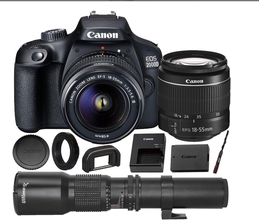
The Canon EOS 2000D (Rebel T7) DSLR Camera with EF-S 18–55mm f/3.5–5.6 DC III Lens and Deluxe Accessory Bundle is an entry-level camera designed for beginners who want to develop their photography skills while enjoying convenient wireless connectivity.
It features a 24.1-megapixel APS-C CMOS sensor that captures detailed photographs with natural-looking colors. Combined with the DIGIC 4+ image processor, it provides dependable image quality for portraits, landscapes, travel photography, and everyday occasions.
One of its most useful features is built-in Wi-Fi with NFC, which makes transferring photographs to compatible devices more convenient. Users can connect the camera to a compatible smartphone or tablet to share images, manage photographs, and explore supported wireless functions.
This connectivity is particularly helpful for beginners who want to publish their pictures on social media or send them to friends and family without relying entirely on cables.
The camera includes a 3.0-inch LCD monitor with approximately 920,000 dots, allowing users to review photographs, navigate menus, and check composition. Its nine-point autofocus system, including a central cross-type point, helps focus on subjects during everyday shooting.
With ISO settings ranging from 100 to 6400, photographers can adjust sensitivity to suit different lighting conditions, although higher settings may introduce visible image noise.
The Canon EOS 2000D records Full HD video at up to 1080p and 30 frames per second, making it suitable for family videos, travel clips, and basic content creation. Continuous shooting reaches approximately three frames per second, which works for casual photography but may be limiting when capturing fast-moving sports or wildlife.
Beginners can also benefit from Scene Intelligent Auto mode, which automatically adjusts camera settings according to the shooting situation. Creative Auto and built-in creative filters provide additional ways to experiment with photographic effects without mastering every manual control immediately.
The included EF-S 18–55mm lens offers a practical starting point for photographing people, landscapes, and everyday subjects. The advertised deluxe bundle also includes a 500mm preset telephoto lens and additional accessories. Buyers should check the complete package contents and understand that preset telephoto lenses may require manual focusing and careful handling.
The Canon EOS 2000D is suitable for photography beginners, students, families, travel enthusiasts, and aspiring content creators who want an affordable DSLR with Wi-Fi. Its automatic modes simplify learning, while interchangeable lenses provide opportunities to explore different photography styles as skills improve.
Specifications
• Sensor: 24.1MP APS-C CMOS
• Image processor: DIGIC 4+
• Included standard lens: EF-S 18–55mm f/3.5–5.6 DC III
• Autofocus: 9-point system with central cross-type point
• ISO range: 100–6400
• Continuous shooting: Up to 3 fps
• Video recording: Full HD 1080p at 30 fps
• Display: 3.0-inch LCD, approximately 920,000 dots
• Connectivity: Built-in Wi-Fi and NFC
Pros
• Detailed image quality: The 24.1MP sensor captures clear photographs for everyday use.
• Convenient wireless sharing: Wi-Fi and NFC simplify connections with compatible devices.
• Beginner-friendly controls: Automatic shooting modes help newcomers get started.
• Versatile standard lens: The 18–55mm lens supports portraits, landscapes, and general photography.
• Useful accessory bundle: Additional equipment can provide more flexibility for different shooting situations.
Cons
• Additional lens considerations: The bundled 500mm preset telephoto lens may require manual focusing and a steady shooting technique.
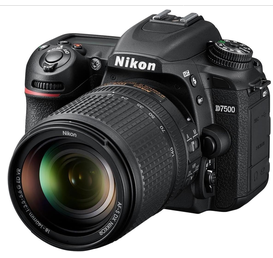
(5)Nikon D7500 20.9MP Best Beginner DSLR Camera with Wifi
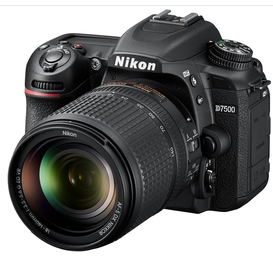
The Nikon D7500 20.9MP DSLR Camera with AF-S DX NIKKOR 18–140mm f/3.5–5.6G ED VR Lens is a versatile camera for beginners who want advanced photography capabilities and room to improve their skills. Its 20.9-megapixel DX-format CMOS sensor works with Nikon’s EXPEED 5 image processor to produce detailed photographs, manage image noise, and support reliable performance in different lighting conditions.
Its image-processing and metering capabilities draw on technology used in Nikon’s D500, making it suitable for photography enthusiasts who want greater creative control.
The included 18–140mm zoom lens covers a broad focal-length range, making it useful for landscapes, portraits, travel photography, and distant subjects. Its vibration reduction (VR) technology helps reduce blur caused by camera shake when shooting handheld.
Because the DX-format sensor changes the effective field of view, the lens provides an angle of view equivalent to approximately 27–210mm on a full-frame camera, offering considerable flexibility without frequent lens changes.
The D7500 features a 51-point autofocus system, including 15 cross-type sensors, along with Group-Area AF. These features help maintain focus on subjects across different shooting situations. Continuous shooting reaches up to eight frames per second, making the camera useful for photographing wildlife, sporting events, pets, and other moving subjects.
Beginners can start with simpler settings and gradually explore its more advanced focusing and exposure controls.
Its 3.2-inch tilting LCD screen has approximately 922,000 dots and supports touch operation. This makes it easier to review images, navigate compatible menus, and compose photographs from high or low angles. The tilting design is particularly useful for travel photography, landscape composition, and creative perspectives.
For video creators, the D7500 supports 4K UHD recording and Full HD 1080p video with stereo sound. Additional capabilities include 4K time-lapse recording, automatic ISO control, and power aperture control in supported video modes. These options allow users to experiment with different recording techniques while developing their creative skills.
The camera also offers built-in wireless connectivity, including Wi-Fi and Bluetooth through Nikon’s SnapBridge system, allowing compatible smart devices to connect for supported image transfers and remote functions.
The Nikon D7500 is suitable for ambitious beginners, hobbyists, travel photographers, and users interested in wildlife, sports, portraits, or video production. Its extensive controls may require some learning, but its autofocus system, versatile zoom lens, and fast continuous shooting make it a camera users can grow into.
Specifications
• Resolution: 20.9MP DX-format CMOS
• Image processor: EXPEED 5
• Included lens: AF-S DX NIKKOR 18–140mm VR
• Autofocus: 51 points, including 15 cross-type sensors
• Continuous shooting: Up to 8 fps
• Display: 3.2-inch tilting touchscreen
• Video: 4K UHD and Full HD 1080p
• Connectivity: Wi-Fi and Bluetooth
• Lens field of view: Approximately 1.5x full-frame equivalent
Pros
• Strong image quality: The sensor and image processor deliver detailed photographs across varied shooting conditions.
• Versatile zoom lens: The 18–140mm lens handles many subjects without frequent lens changes.
• Fast continuous shooting: Eight frames per second helps capture action and fleeting moments.
• Advanced autofocus: The 51-point system supports accurate focusing across different situations.
• Flexible video features: 4K recording and time-lapse options support creative video projects.
• Convenient wireless connectivity: Wi-Fi and Bluetooth simplify connections with compatible devices.
Cons
• Steeper learning curve: Its extensive controls may overwhelm first-time photographers.
(6)Canon EOS 5D Mark IV Best Beginner DSLR Camera with Wifi
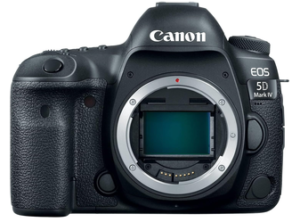
The Canon EOS 5D Mark IV DSLR Camera is a powerful full-frame camera designed for photographers who want high image quality, reliable performance, and advanced creative control. It features a 30.4-megapixel full-frame CMOS sensor that captures detailed photographs with natural colors and impressive tonal depth.
The larger sensor is useful for portraits, landscapes, weddings, and commercial photography, providing flexibility across different lighting conditions.
The camera uses Canon’s DIGIC 6+ image processor to manage image processing and support responsive shooting. It offers a standard ISO range of 100–32,000, expandable from ISO 50 to ISO 102,400, allowing photographers to adjust sensitivity for different environments.
Continuous shooting reaches up to seven frames per second, making the camera suitable for capturing candid moments, events, and moderate action.
Video recording is another important capability of the EOS 5D Mark IV. It supports 4K Motion JPEG recording at 30 or 24 frames per second, Full HD recording at up to 60 frames per second, and HD recording at up to 120 frames per second. These options provide flexibility for filmmakers, videographers, and content creators who want to combine still photography with video production.
The camera features Dual Pixel CMOS autofocus, which provides responsive focusing during Live View photography and compatible video recording. Its LCD touchscreen allows users to select focus areas and navigate supported controls directly on the display.
These features are useful when composing photographs from different angles or recording video without relying on the optical viewfinder.
Built-in Wi-Fi makes transferring photographs to compatible devices more convenient. Using Canon’s Camera Connect app, photographers can transfer images to smartphones for viewing and sharing. The camera can also exchange data with compatible Wi-Fi-enabled Canon cameras, supporting certain professional workflows.
Because this is a body-only package, buyers must purchase a compatible lens separately. This allows photographers to select equipment suited to their preferred subjects, whether portraits, landscapes, wildlife, or event photography.
The Canon EOS 5D Mark IV is best suited to serious photography enthusiasts, aspiring professionals, wedding photographers, portrait specialists, and hybrid photo-and-video creators. Beginners can learn with it, but its advanced features, full-frame lens requirements, and relatively high system cost make it more appropriate for users committed to developing their photography skills.
Specifications
• Sensor: 30.4MP full-frame CMOS
• Image processor: DIGIC 6+
• ISO range: 100–32,000, expandable to 50–102,400
• Continuous shooting: Up to 7 fps
• 4K video: Motion JPEG at 30 or 24 fps
• Full HD video: Up to 60 fps
• HD video: Up to 120 fps
• Autofocus: Dual Pixel CMOS AF for Live View and video
• Connectivity: Built-in Wi-Fi
Pros
• High-resolution photographs: The full-frame sensor captures detailed images suitable for professional and creative work.
• Flexible low-light settings: The broad ISO range allows adjustment for challenging lighting conditions.
• Versatile video recording: 4K, Full HD, and high-frame-rate HD options support different projects.
• Responsive autofocus: Dual Pixel CMOS AF supports smooth focusing during compatible Live View and video use.
• Convenient wireless transfers: Wi-Fi and the Camera Connect app simplify image sharing with compatible devices.
• Customizable lens selection: The body-only format allows buyers to choose lenses that match their photographic interests.
Cons
• No included lens: Buyers must budget separately for a compatible lens.
Read also:5 Begginer DSLR Camera with Lens
Advantages of the Best Beginner DSLR Cameras with Wi-Fi
1. Excellent Image Quality
One of the main advantages of Best Beginner DSLR Camera with Wifi is their ability to capture detailed photographs with natural colors and good image clarity. Models such as the Canon EOS Rebel T7, Nikon D7500, and Canon EOS 90D feature APS-C sensors, while the Canon EOS 5D Mark IV uses a full-frame sensor.
These sensors help produce high-quality images for portraits, landscapes, family events, and travel photography. Their adjustable settings also allow beginners to experiment with exposure, ISO, and other controls as they develop their photography skills.
2. Convenient Wireless Connectivity
Built-in Wi-Fi makes it easier for beginners to transfer photographs from their cameras to compatible smartphones, tablets, and computers. This feature reduces the need for cables and allows users to share their favorite images on social media, send pictures to friends, or back up selected files.
Some compatible cameras also support smartphone-based remote shooting through dedicated applications. For beginners who want to share their photography quickly, wireless connectivity makes the process more convenient and accessible.
3. User-Friendly Controls and Learning Features
Many beginner-friendly DSLR cameras include automatic shooting modes, accessible menus, and helpful display features that simplify the learning process. For example, the Canon EOS Rebel T7 and EOS 2000D offer automatic modes that adjust camera settings according to shooting conditions.
These functions help newcomers capture photographs without immediately mastering manual exposure. As their confidence improves, users can gradually explore shutter speed, aperture, ISO, and autofocus settings to gain greater creative control over their images.
4. Versatility for Different Photography Styles
Beginner DSLR cameras can handle a wide range of photographic activities, including portraits, landscapes, travel photography, wildlife observation, sports, and family events. Interchangeable-lens compatibility allows users to select lenses suited to their interests.
For instance, a standard 18–55mm lens is useful for everyday photography, while a telephoto lens can help photograph distant subjects. Cameras such as the Nikon D7500 and Canon EOS 90D also offer faster continuous shooting, making them useful for capturing moving subjects. This versatility allows photographers to explore different creative interests without needing a separate camera for every activity.
5. Long-Term Value and Opportunities for Improvement
A beginner DSLR can provide lasting value because users can build their photography skills while gradually expanding their equipment. Instead of replacing the entire camera system when their interests change, they can invest in additional lenses, compatible flashes, tripods, and other accessories.
Cameras with more advanced autofocus systems, higher-resolution sensors, or expanded video capabilities can also support more demanding projects as experience grows. Choosing a model with suitable features and reliable lens compatibility gives beginners a practical foundation for progressing from casual photography to more advanced creative work.
Factors to consider when choosing the Best Beginner DSLR Camera with Wifi
1. Image Quality and Sensor Resolution
Image quality is one of the most important factors when choosing a beginner DSLR camera with Wi-Fi. Consider the sensor size and resolution, as these influence image detail, cropping flexibility, and performance in different lighting conditions.
Cameras with APS-C sensors are generally suitable for beginners because they provide detailed photographs for portraits, landscapes, travel, and everyday activities. Full-frame sensors can offer additional benefits in certain shooting conditions but may come with higher equipment costs. Choose a camera that delivers the image quality you need without paying for features you may not use.
2. Wi-Fi and Wireless Connectivity
Since convenient sharing is a priority, check whether the camera has built-in Wi-Fi and whether it supports Bluetooth or NFC. Wi-Fi allows compatible devices to exchange photographs wirelessly, while Bluetooth can help maintain a connection between the camera and a smartphone.
Also, consider whether the manufacturer provides a compatible mobile application for image transfers and remote shooting. Before purchasing, verify that the camera works with your smartphone’s operating system and supports the wireless functions you expect. Reliable connectivity can make managing and sharing photographs easier.
3. Ease of Use and Beginner-Friendly Features
A beginner DSLR should be easy to understand while providing opportunities to learn more advanced techniques. Look for intuitive menus, comfortable controls, automatic shooting modes, and a clear display. Guided settings and scene modes can help newcomers take better photographs before they understand exposure, aperture, and shutter speed.
An optical viewfinder can also help users learn composition and framing. As your experience increases, access to manual controls will allow you to experiment with creative settings and develop a more personalized photography style.
4. Autofocus Performance and Shooting Speed
Autofocus performance determines how effectively a camera focuses on subjects, while continuous shooting speed affects how many photographs it can capture in quick succession. Beginners who mainly photograph landscapes, portraits, or stationary subjects may be comfortable with a basic autofocus system.
However, those interested in wildlife, children, sports, or moving pets should consider a camera with more autofocus points, reliable subject tracking, and a faster burst rate. These features improve the chances of capturing sharp images when subjects move unexpectedly. Consider your preferred photography activities before deciding which capabilities are necessary.
5. Lens Compatibility and Available Accessories
Lens compatibility is important because different photography styles require different focal lengths and specialized equipment. A standard zoom lens is a practical starting point for everyday photography, portraits, and landscapes. If you later become interested in wildlife, sports, or macro photography, you may want to purchase additional lenses.
Check the camera’s lens mount, the availability of compatible lenses, and the cost of accessories before buying. It is also worth checking whether the package includes a battery, charger, memory card, lens, and carrying bag, as these items can affect the overall cost of getting started.
6. Video Capabilities, Battery Life, and Budget
Consider the camera’s video resolution, battery performance, and total purchase cost before making your final decision. Full HD recording is sufficient for many beginners, while 4K video may be useful for higher-resolution content creation.
If you intend to record long sessions, check battery capacity and whether spare batteries are affordable and available. Establish a realistic budget that covers the camera, lens, memory cards, and any necessary accessories. Rather than choosing a camera based on specifications alone, prioritize the features that match your intended use and leave room in your budget for future upgrades.
3 Best Beginner DSLR Cameras with Wi-Fi FAQs
1. What is the best beginner DSLR camera with Wi-Fi?
The best beginner DSLR camera with Wi-Fi depends on your budget, photography goals, and preferred features. A good option should offer reliable image quality, built-in wireless connectivity, easy-to-use controls, and compatibility with interchangeable lenses.
Look for a camera with automatic shooting modes, a suitable autofocus system, and a smartphone application that makes transferring photographs simple. These features help beginners learn photography while enjoying the convenience of sharing images wirelessly.
2. Why should beginners choose a DSLR camera with built-in Wi-Fi?
A DSLR camera with built-in Wi-Fi allows beginners to transfer photographs to compatible smartphones, tablets, or other devices without relying entirely on cables. This makes it easier to share pictures on social media, send images to friends and family, and organize photographs.
Some cameras also support remote shooting through a compatible mobile application, allowing users to control certain camera functions from their smartphones. These capabilities are especially useful for travel photography, family gatherings, and creating online content.
3. What features should I look for in a beginner DSLR camera with Wi-Fi?
When choosing the Best Beginner DSLR Camera with Wifi , prioritize image quality, wireless connectivity, ease of use, autofocus performance, and lens compatibility. A sensor with sufficient resolution helps capture detailed photographs, while automatic shooting modes make learning easier. Built-in Wi-Fi and a compatible smartphone application simplify image sharing.
You should also consider battery life, video recording capabilities, continuous shooting speed, and the cost of additional lenses. Choosing a camera that balances these features with your budget will help you develop your photography skills over time.
FINAL VERDICT
Choosing the Best Beginner DSLR Camera with Wifi becomes easier when you consider image quality, wireless connectivity, ease of use, autofocus performance, and lens compatibility. The cameras discussed offer different advantages, from beginner-friendly automatic modes and convenient smartphone sharing to advanced autofocus systems, high-resolution sensors, and versatile video recording.
Models with built-in Wi-Fi are particularly useful for photographers who want to transfer images quickly and share their experiences online, while interchangeable lenses provide room to explore different photography styles as skills improve.
Before making your final decision, consider your budget, preferred photography activities, and the accessories included in each package. By selecting a camera that balances performance, convenience, and long-term value, you can build a solid foundation for learning photography and capturing memorable moments with confidence.